No matter where you are in Baja, these products and ideas will support you and make your life much easier in what’s probably the toughest of the bikepacking routes! Enjoy another episode of BAJA-PROOF plenty of useful informations.
(Full list of all BAJA-PROOF products tested so far here )
Terms of use: The tips and modifications suggested in this section of the site are to be considered as potential ideas only and should be followed at your own risk. Bikepackingbaja.com, its partners, associates, and contributors are in no way liable for personal injury, damage to personal property, or any other such situation that might happen to individual riders who decide to implement these suggestions.
product:
BIKERANDO’S “BIRI” BIKESTAND
“Many believe something to be impossible to make, until a fool, who doesn’t know that, comes along and invents it. ( Albert Einstein)“
Nothing could be more fitting than Bikerando’s social media caption. Whether the company’s CEO, Roberto, was a fool or simply fearless before inventing the BIRI bike stand, we may never know—but what’s certain is that he created something that solves a practical problem faced by all bikepackers. And he did it in the simplest and most efficient way possible.
A lightweight, telescopic, super practical bike stand that can hold an huge amount of weight and supports whatever bikepacking rig in all types of uneven terrains including deep sand.
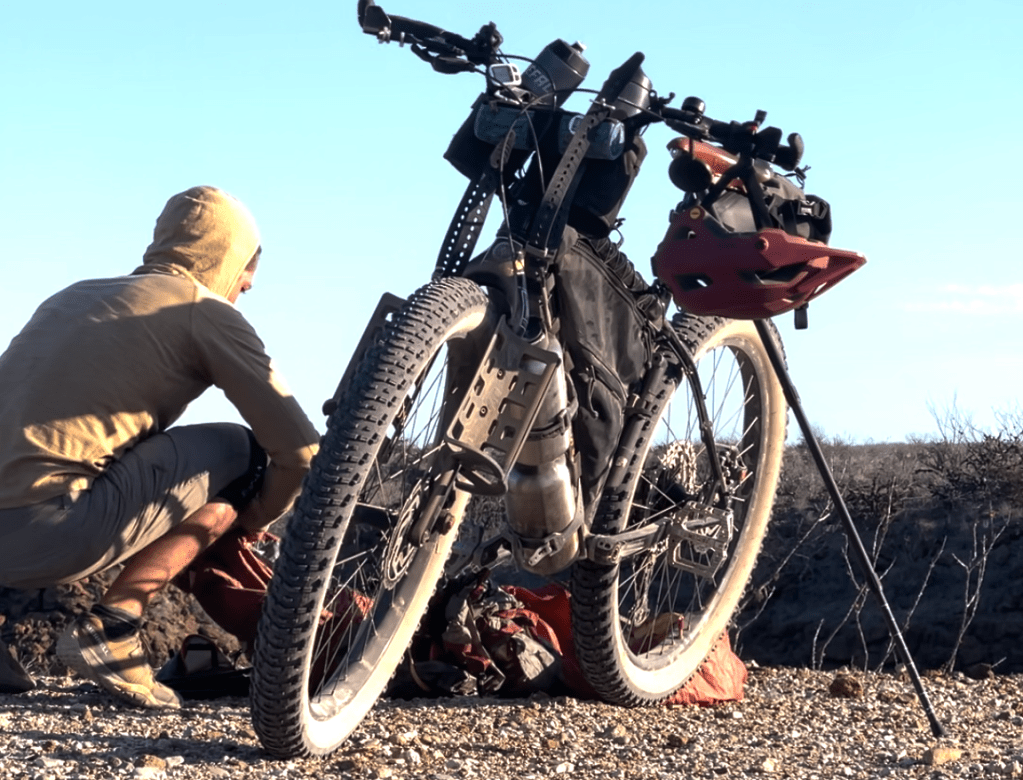
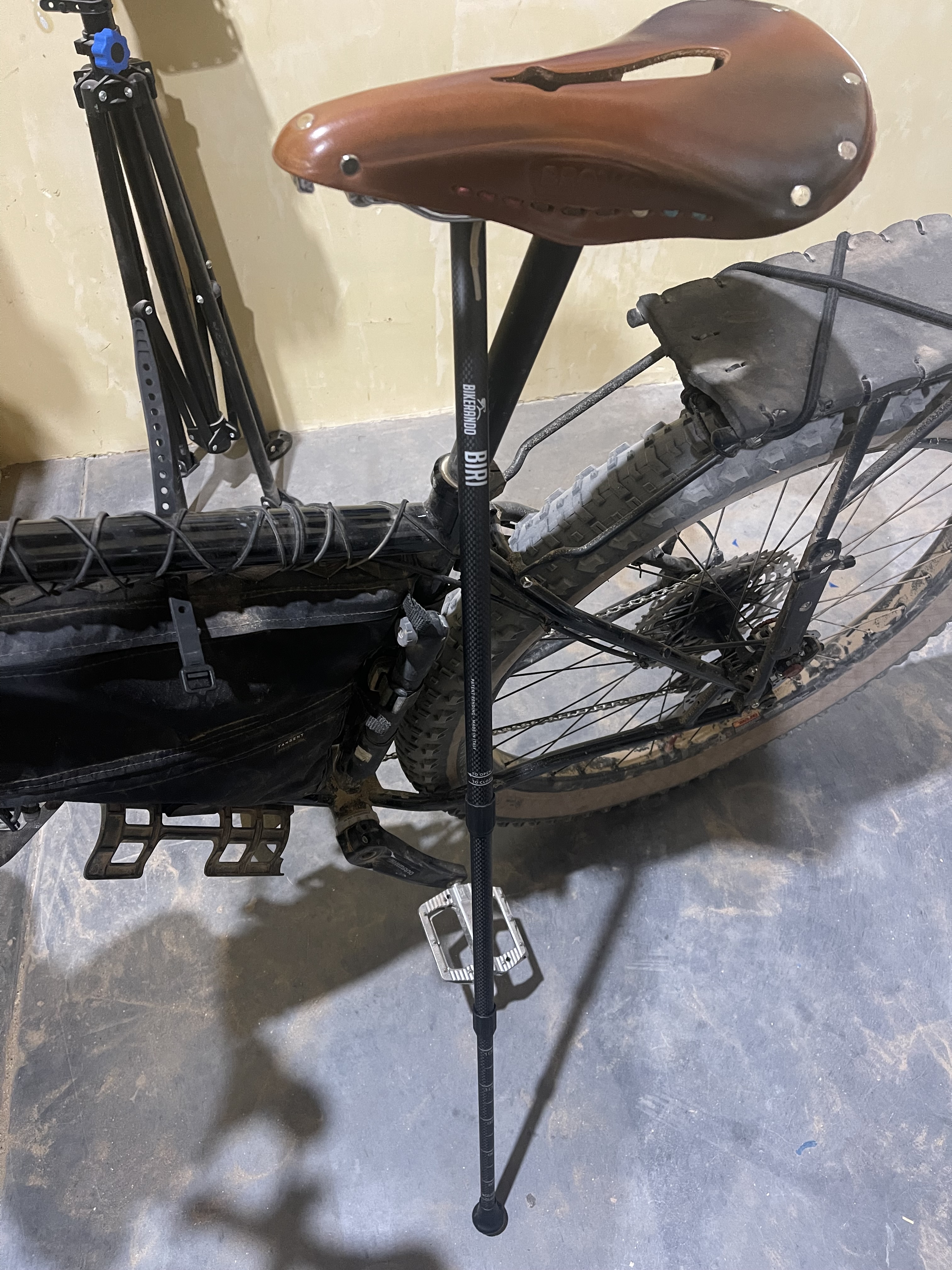
This is exactly what the BIRI is—a stick! Just like a collapsible hiking pole that can hold anything you lean on it. Why? Because the attachment point on the bike is as high as it gets (right on the saddle…..veeeery smart!), creating the strongest possible leaning angle and almost completely neutralizing the weight leverage of a loaded bike.
Pair this with the second, Nobel Prize-worthy concept: a HAND BRAKE that prevents the bike from rolling in any direction. What you get is one of the smartest and most useful pieces of bikepacking equipment ever created—100% BAJA-PROOF, of course!
The company is based in the cycling area of North East Italy and the product is patented and made in Italy.
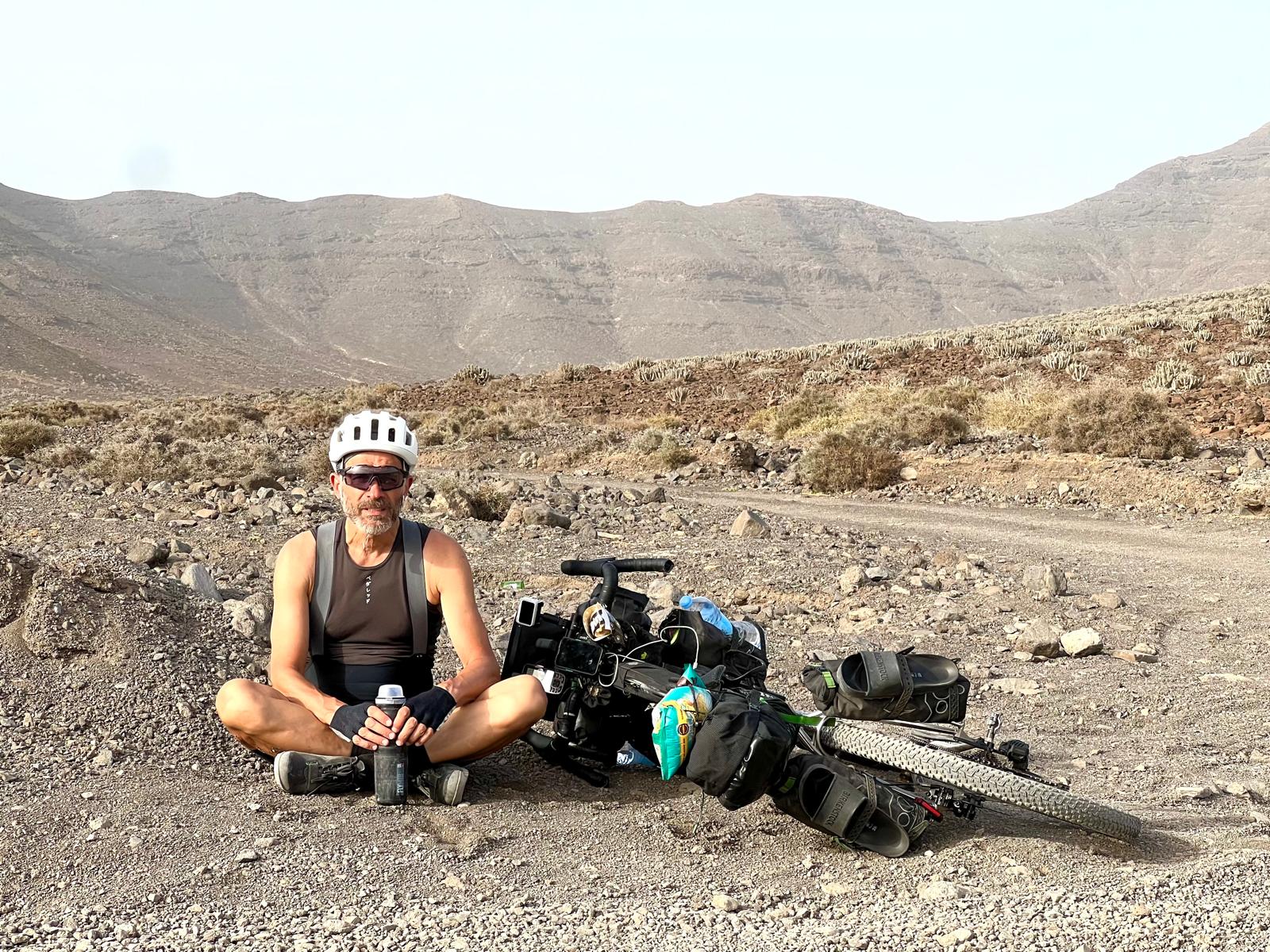
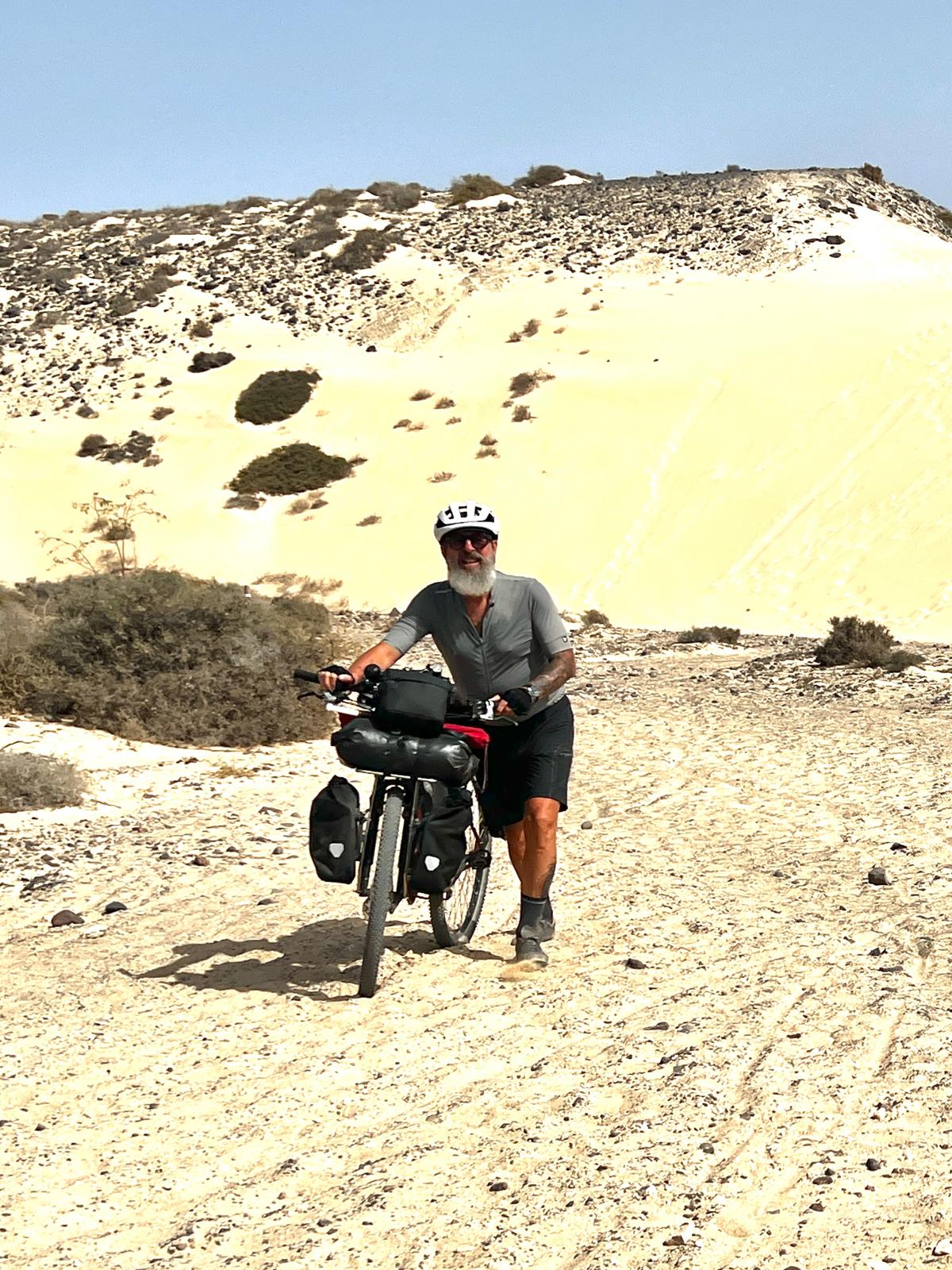
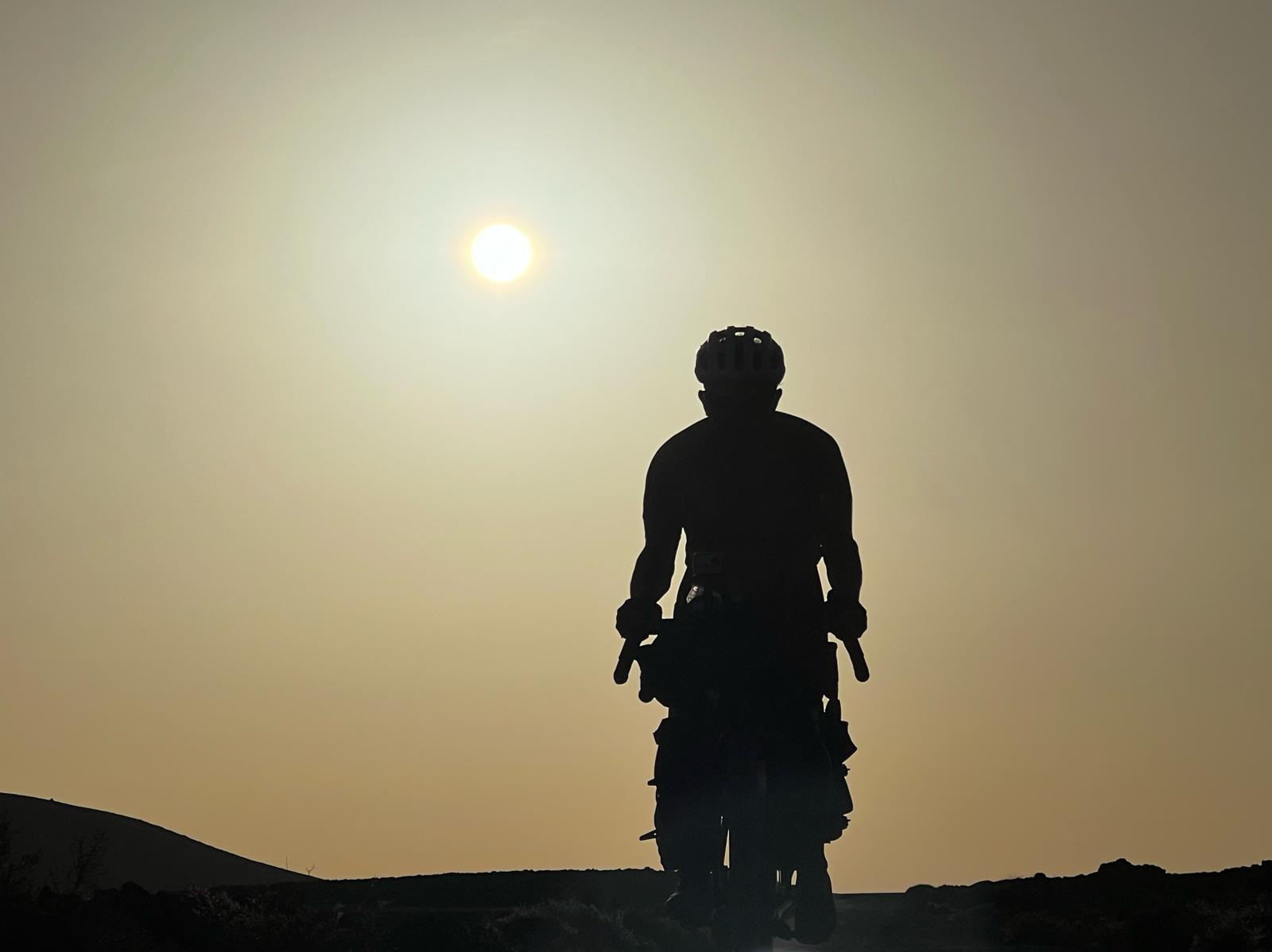
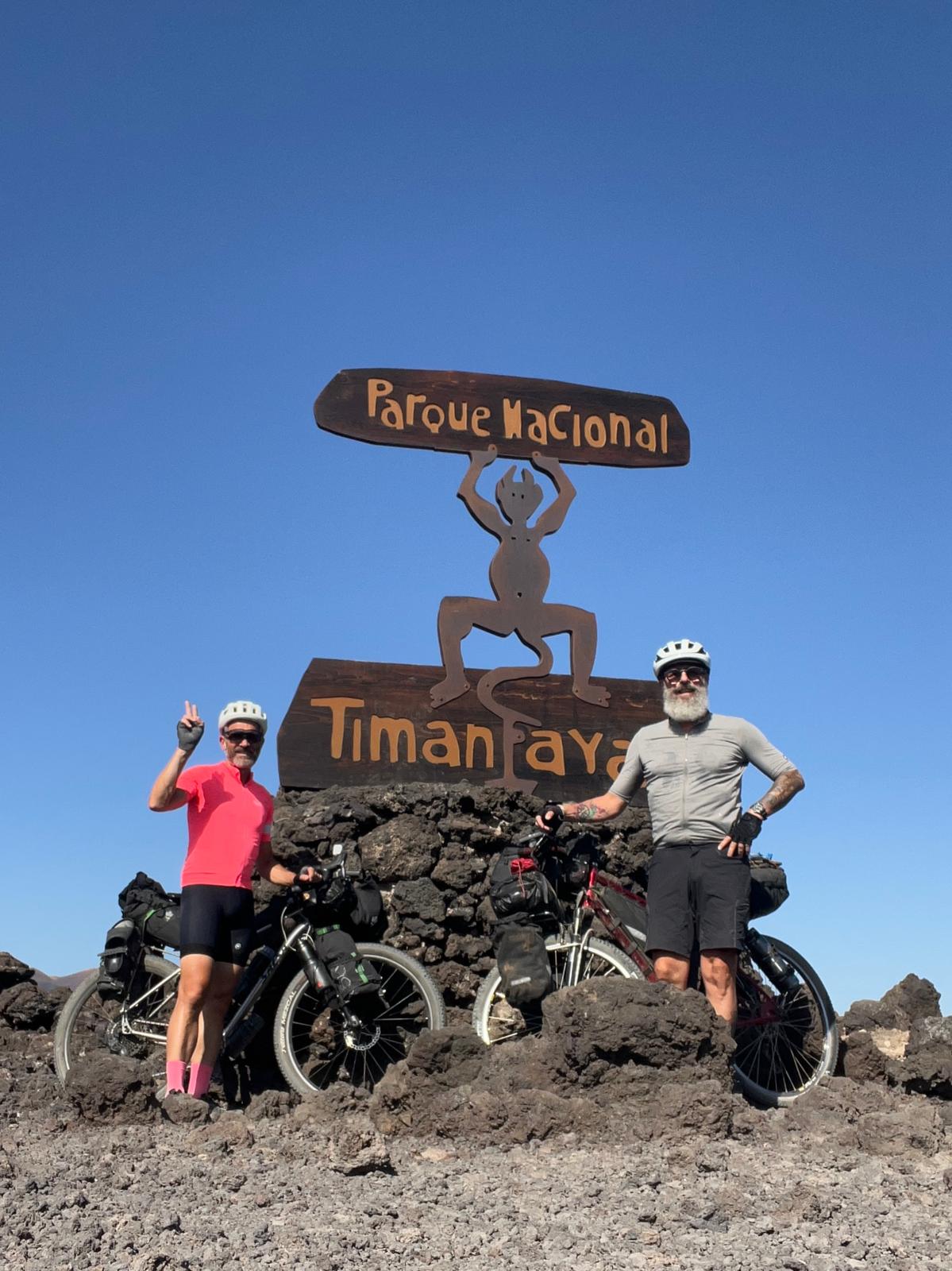
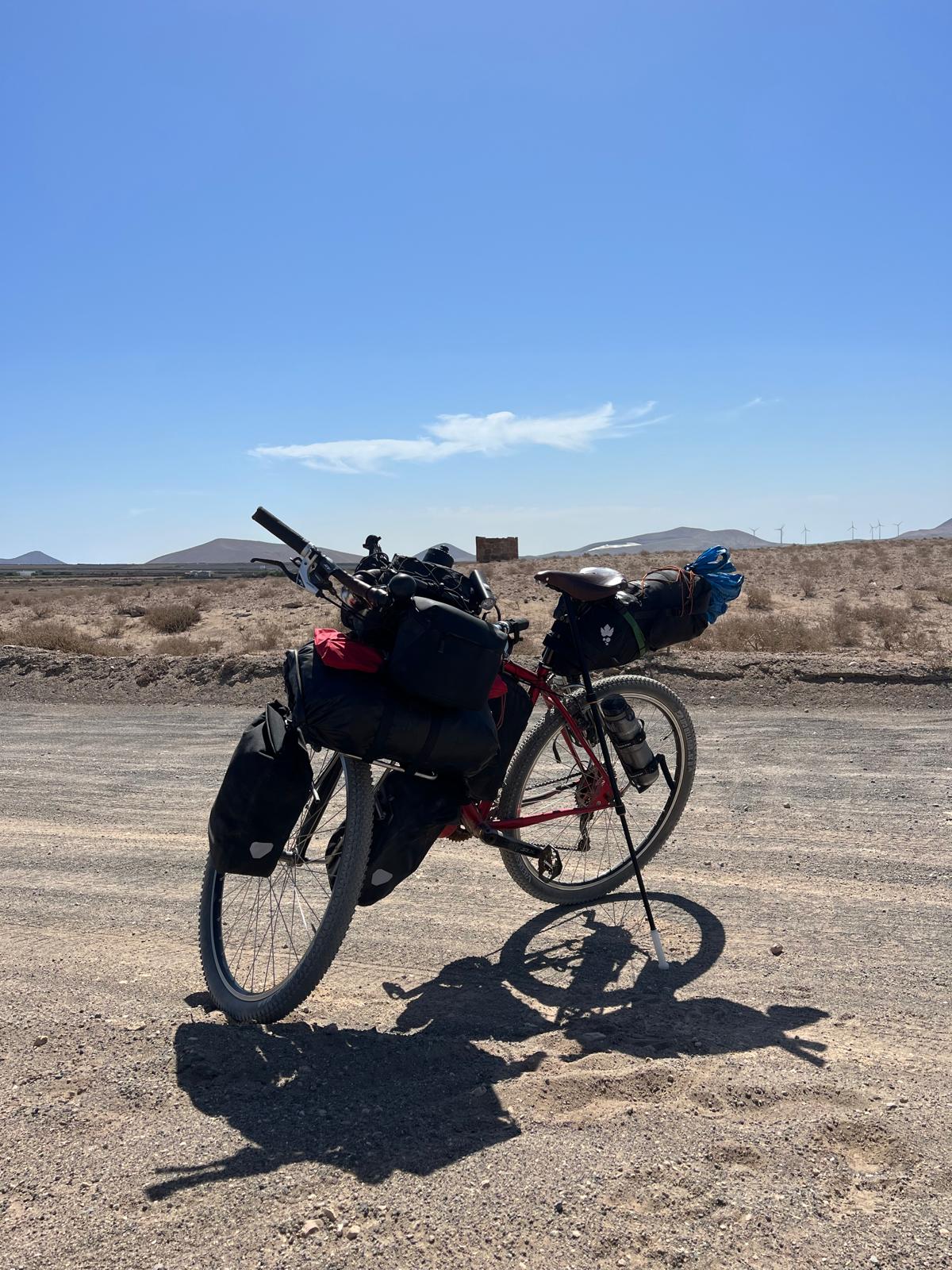
We asked Roberto about what the name BIRI means and how he came up with it and he answered: “Before going into production with the BIRI, we figured it was best to test the prototype on a trip. The prototype was made by modifying a single-legged telescopic stand for videomaking, right in a friend’s workshop. We went to the Canary Islands—specifically Fuerteventura and Lanzarote. Islands where you find a bit of everything: sand, gravel, lava, wind, heat, and salt. We were loaded like mules, on purpose, to test the BIRI’s durability and practicality. It was two weeks spent not only riding, but also trying to come up with a name for the final product. We brainstormed countless names, but in the end, on our last night before flying back to Italy, we treated ourselves to a seafood dinner by the sea. And there—after a few too many drinks (the kind of buzz a true Venetian would be proud of)—the name BIRI was born, with laughter all around. Here in eastern Verona, saying something is “del Biri” is like saying it’s nonsense or rubbish. Just to give you an idea: in Vicenza, only 20 km from where I live, people have no idea what “Biri” even means in dialect. Out of all the names we came up with, Biri won me over—short, catchy, and musical. That’s the story behind the name, with all the fun that came with it!“
The BIRI comes in two variants.
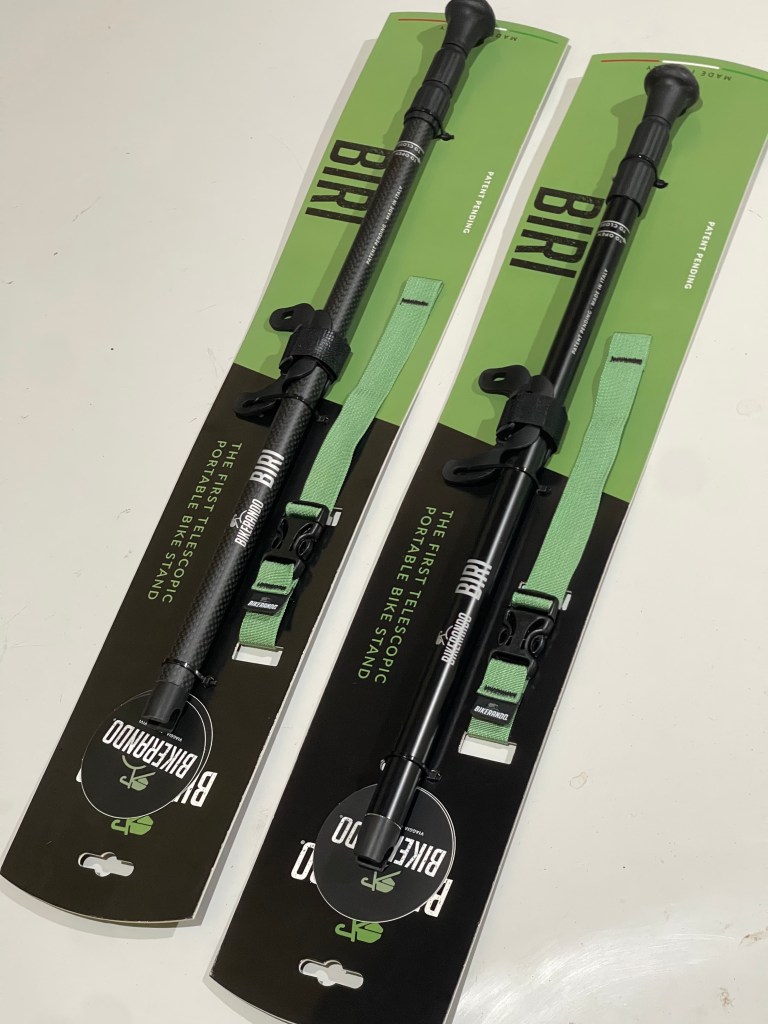
The PRO version weighs 130 g, costs €89, is certified to hold up to 100 kg, and is made of carbon fiber. The ADVANCED version is made of aluminum, weighs 170 g, and costs €69. Both versions are well worth the price and can be considered a once-in-a-lifetime investment. Both versions are 50cm long when closed and can extend up to 110cm.
For those planning to use the bike stand in extremely low temperatures, we recommend the carbon PRO version, as the aluminum one may become sticky in the cold!
The BIRI is also a great upgrade for minimalist gear lovers as it can also serve as a single tent pole. Another second way to use this unique piece of equipment thy can be detached in a couple seconds with one hand is in case of dogs attacks as a deterrent.
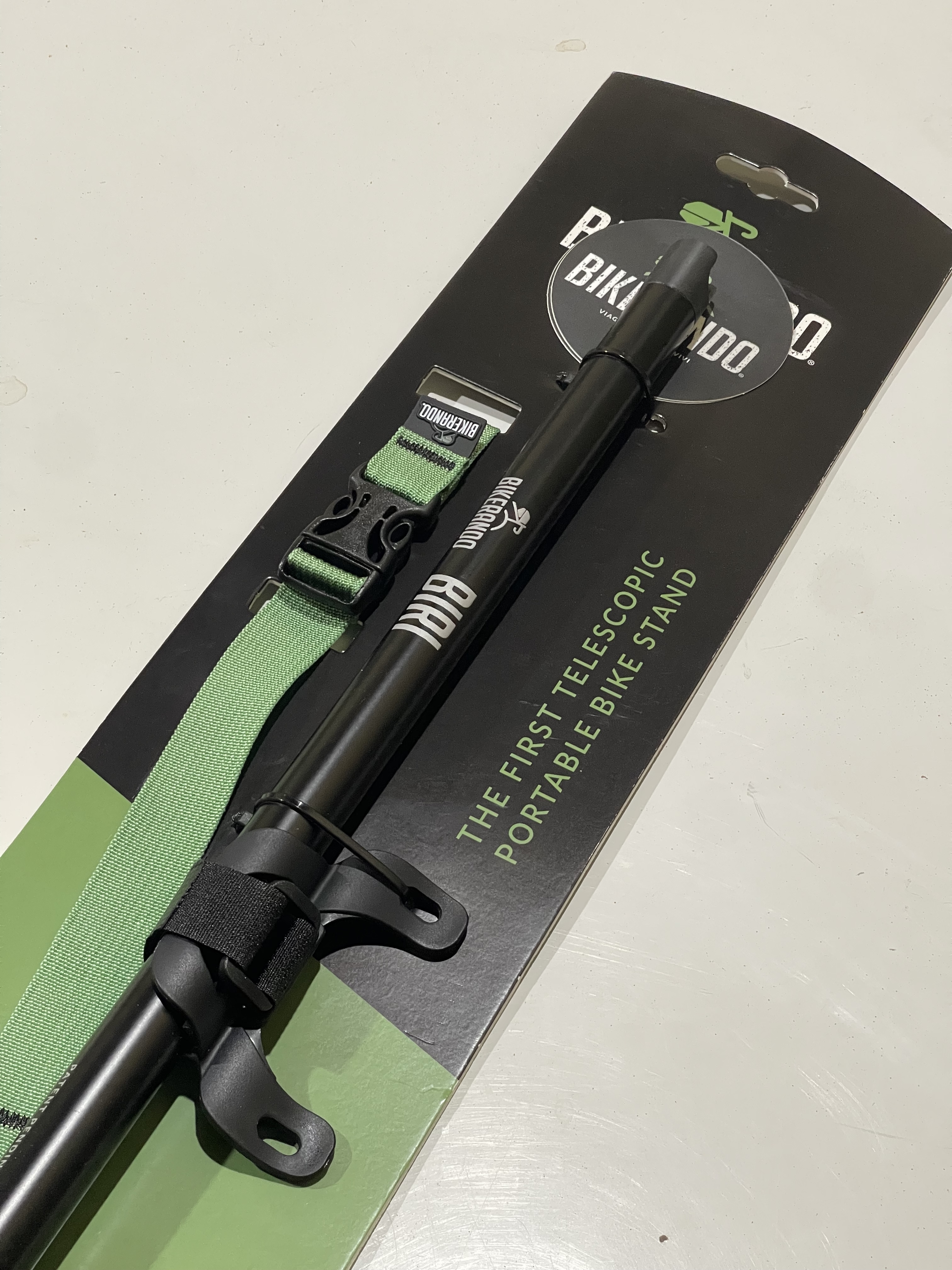
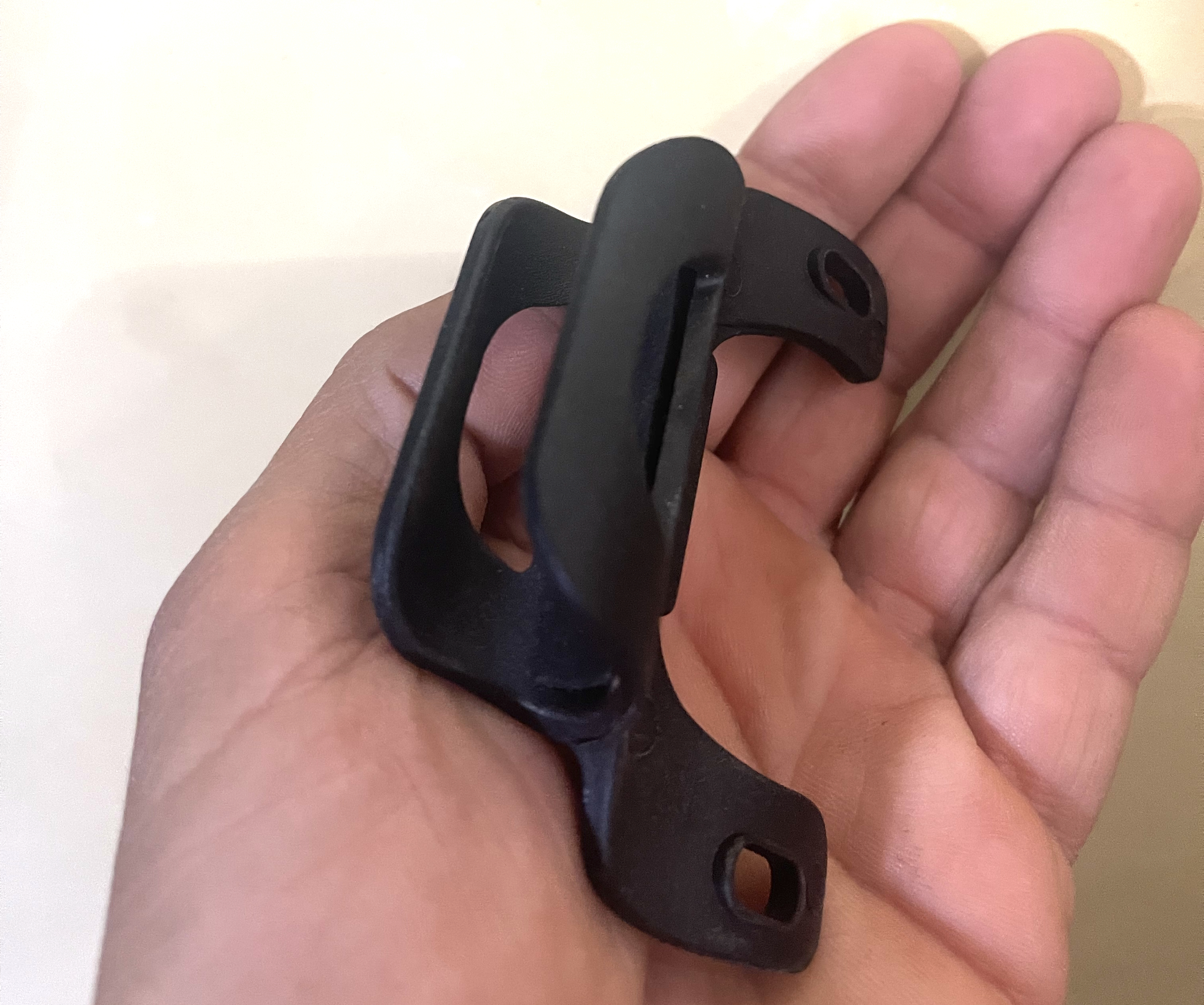
The product package comes with the bikestand, a mounting clip and the hand brake strap.
The only two upgrades we suggest Bikerando consider are the following:
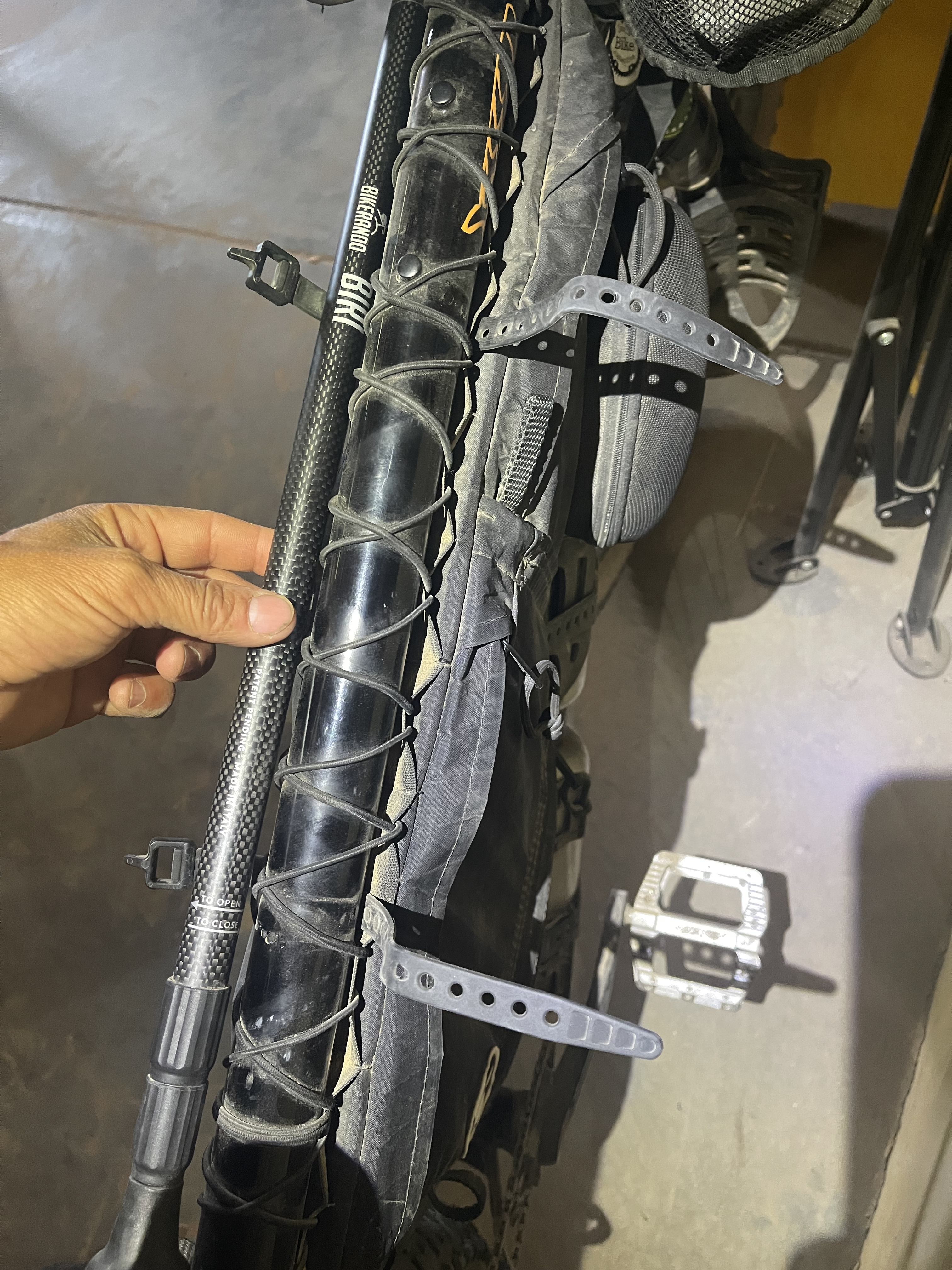
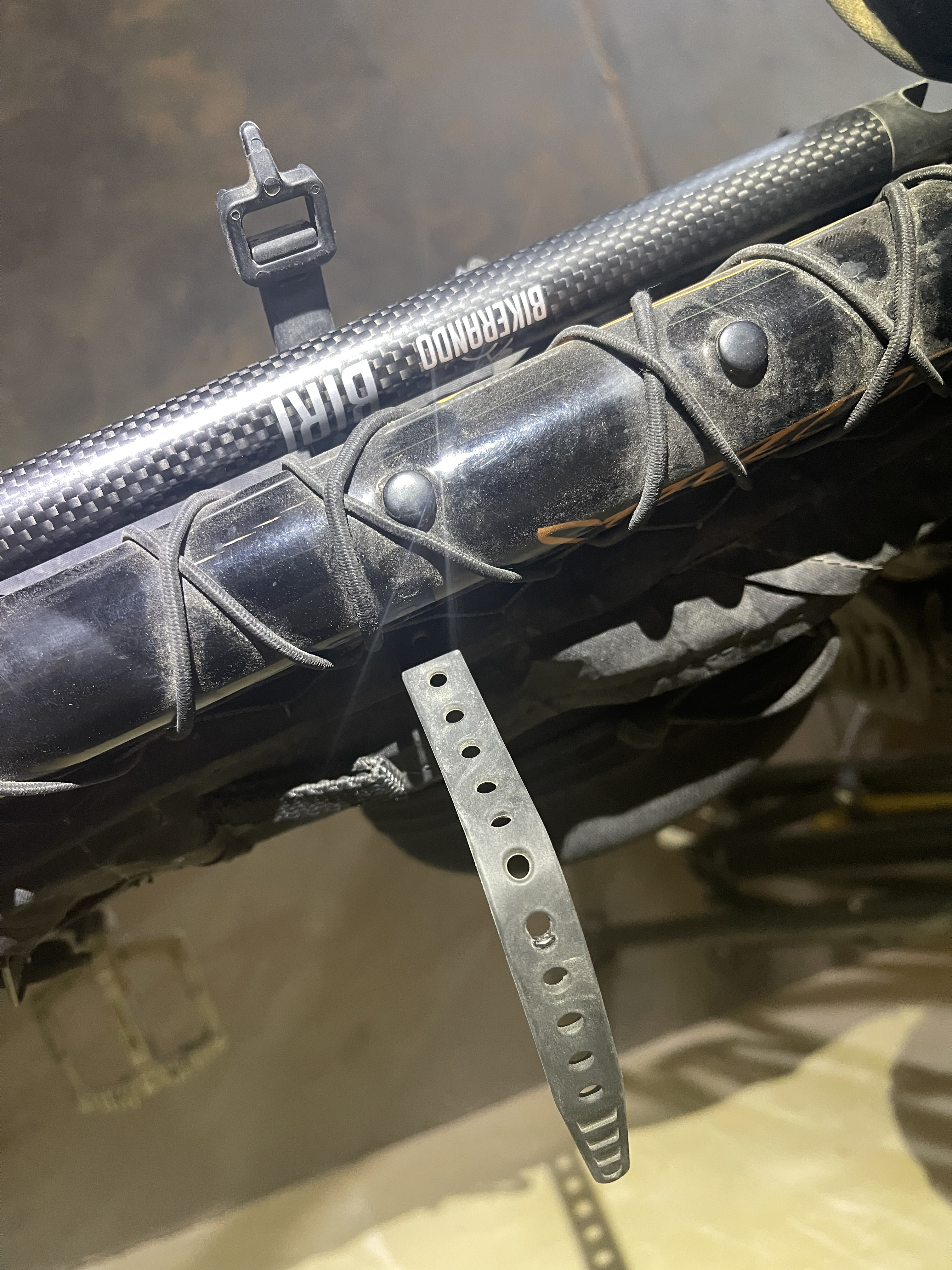
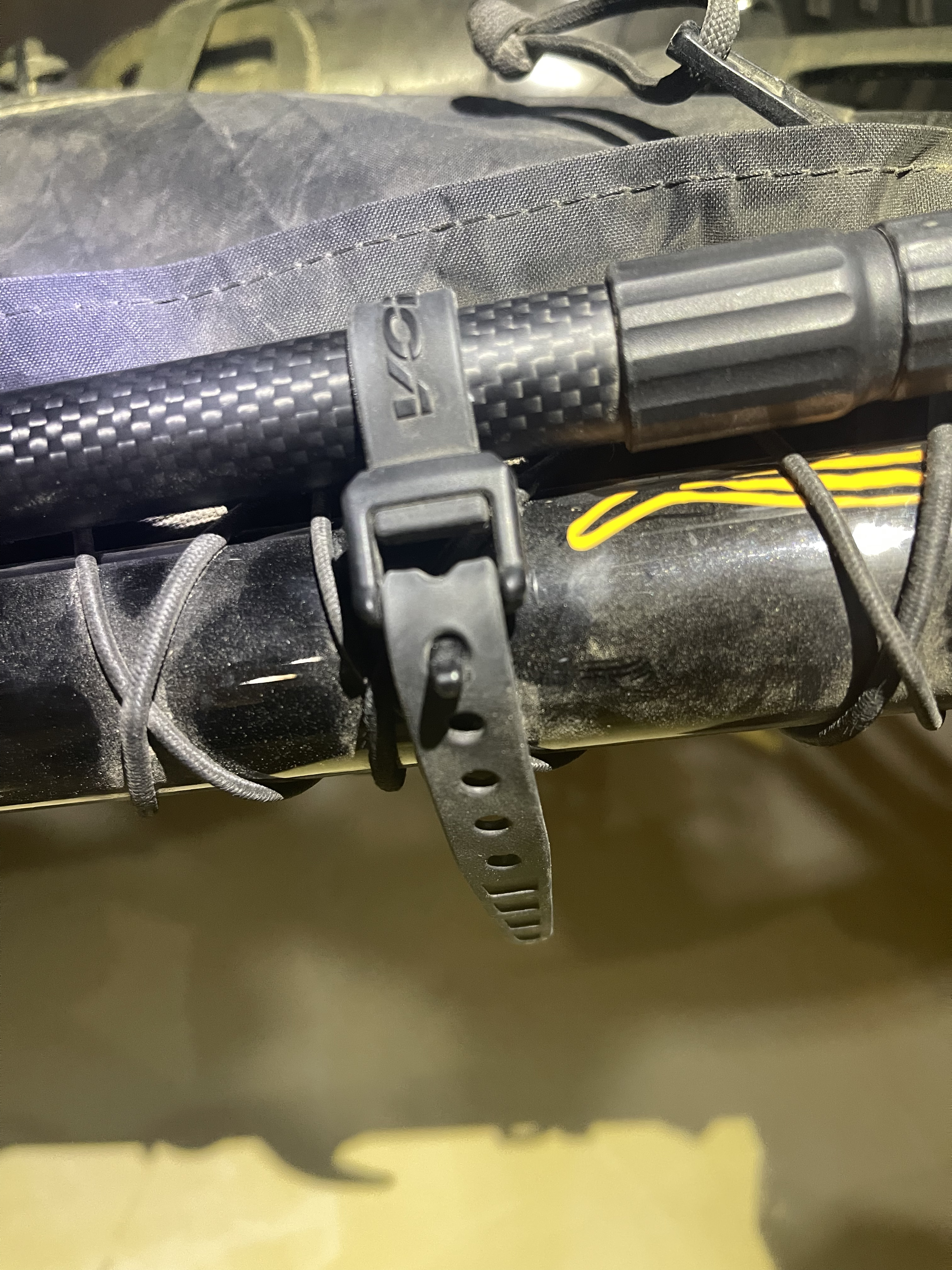
1. Eliminate the mounting clip. It doesn’t suit bikepacking bikes well, as these often have overstuffed frame bags that overlap the clip, making it difficult to reattach the BIRI. The small Velcro strap connected to the clip becomes hard to reach and usually requires two hands to secure. Even when clipped in and strapped, the pole still feels a bit wobbly and unstable in the mount. It also doesn’t feel very solid and considered the rough heavy duty usage that bikepacking gear needs to bear, we fear it could brake easily and this could happen without the rider noticing it causing the loss of the bikestand. We replaced the mount with two simple, narrow 9-inch Voilé straps, which work extremely well. They can be tightened and loosened with one hand, and the process is quick and efficient.
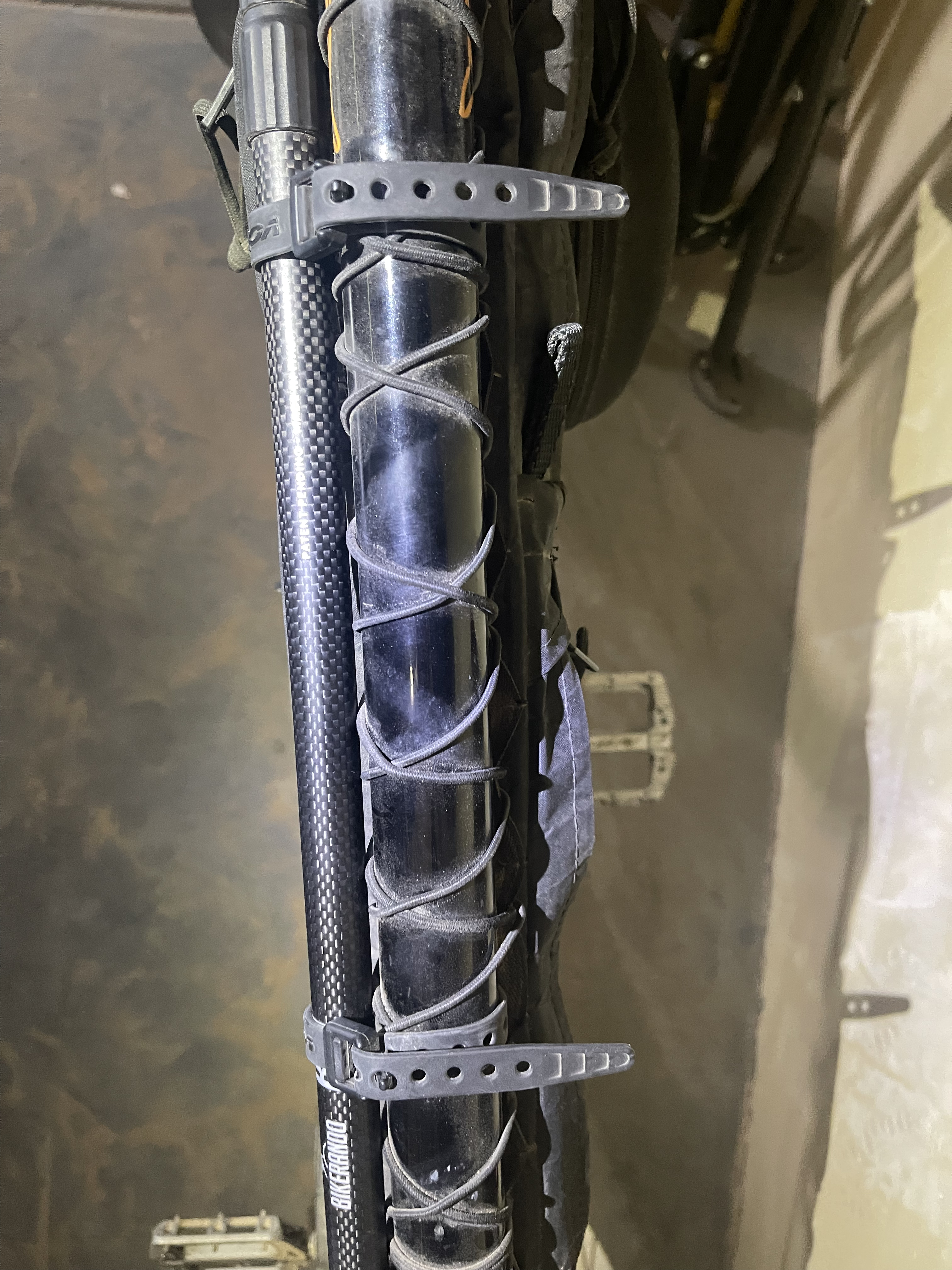
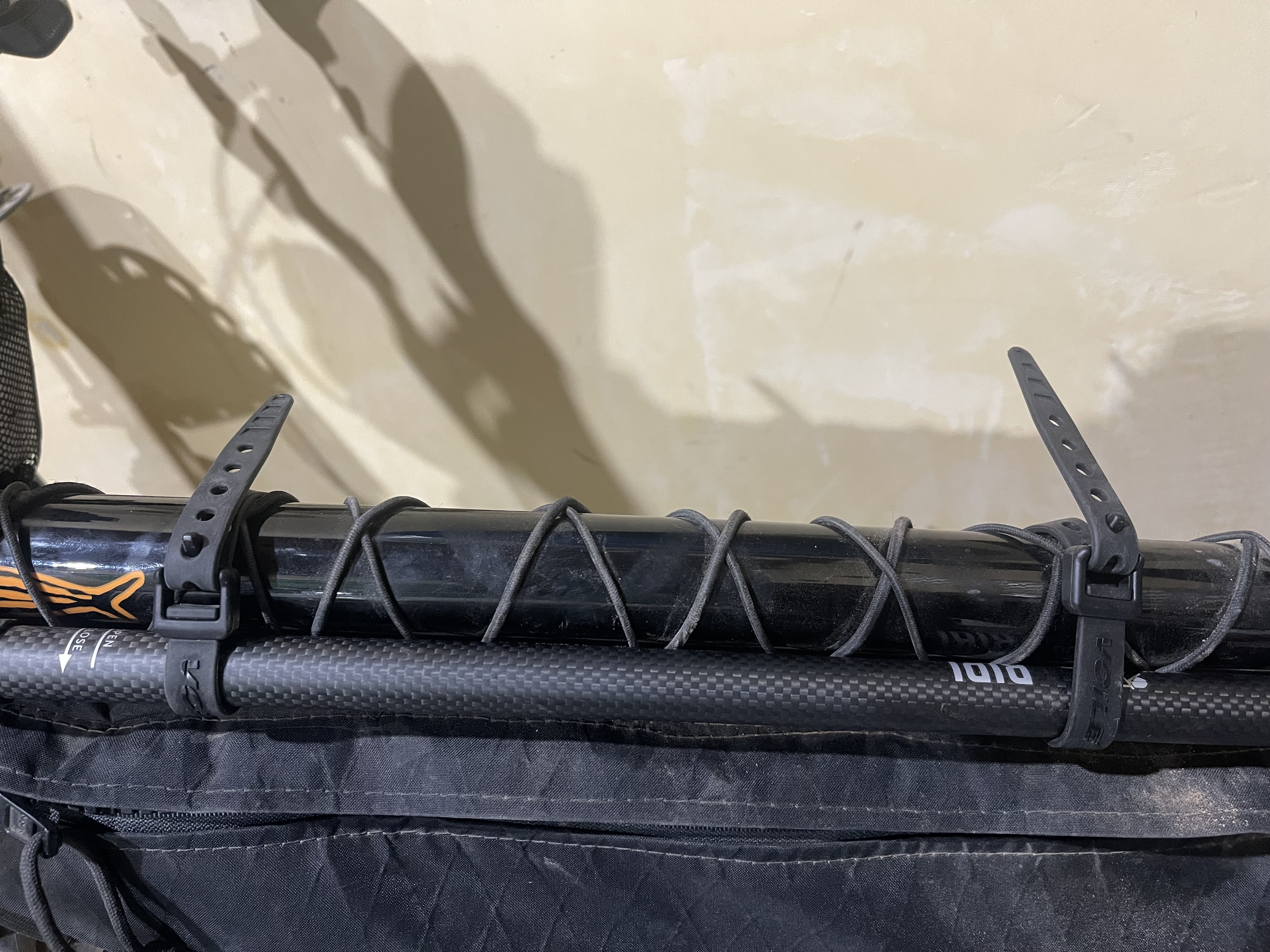
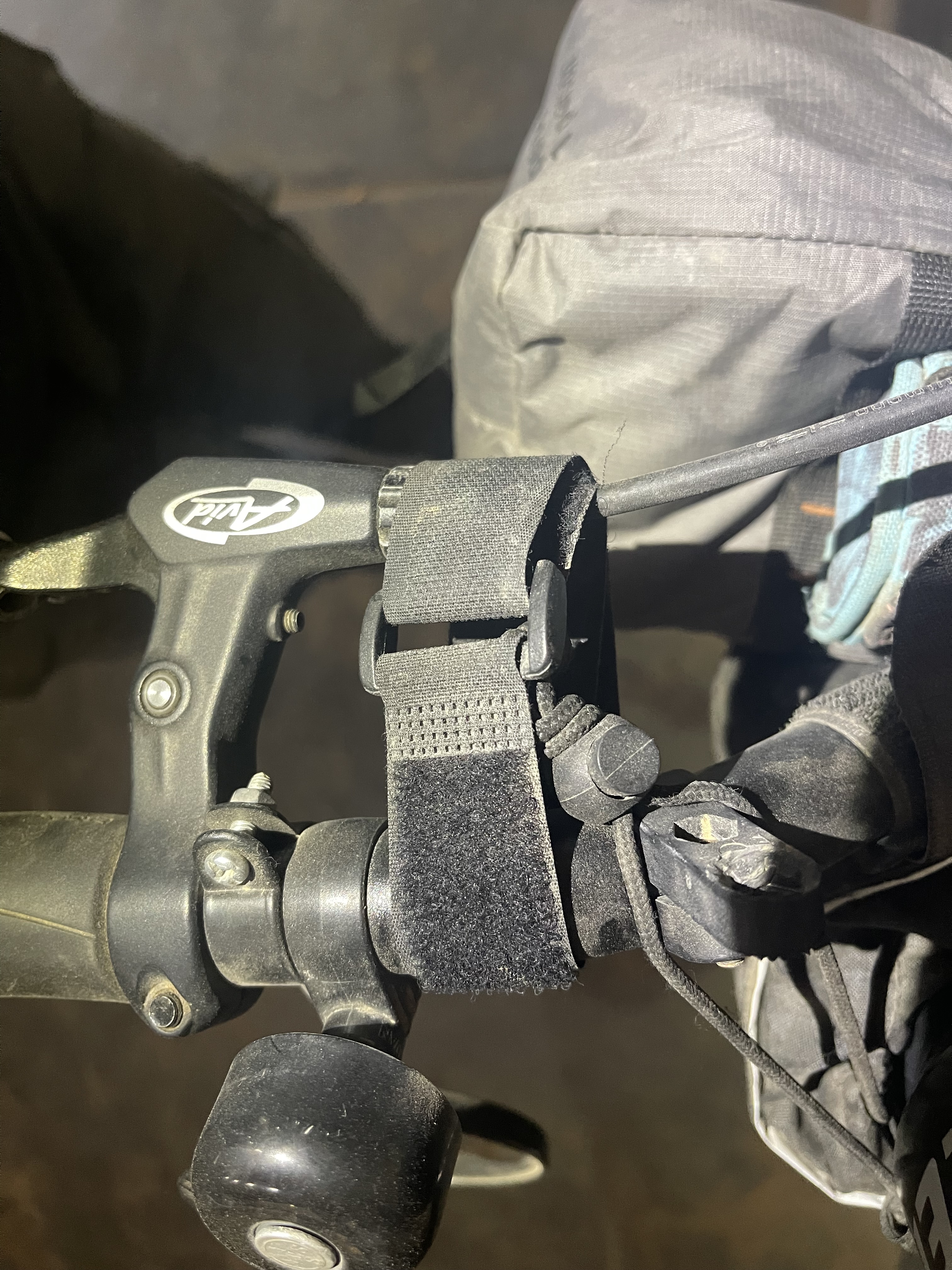
2. Replace the clip-style hand brake strap with a sliding Velcro one. The original strap tends to roll when trying to tighten it with one hand, as it requires significant force to pull the belt through the locking system. Also, when not in use, there’s too much excess strap hanging loose, which can’t be secured tightly. A Velcro strap, on the other hand, eliminates this issue and allows for easier handling and a cleaner setup.
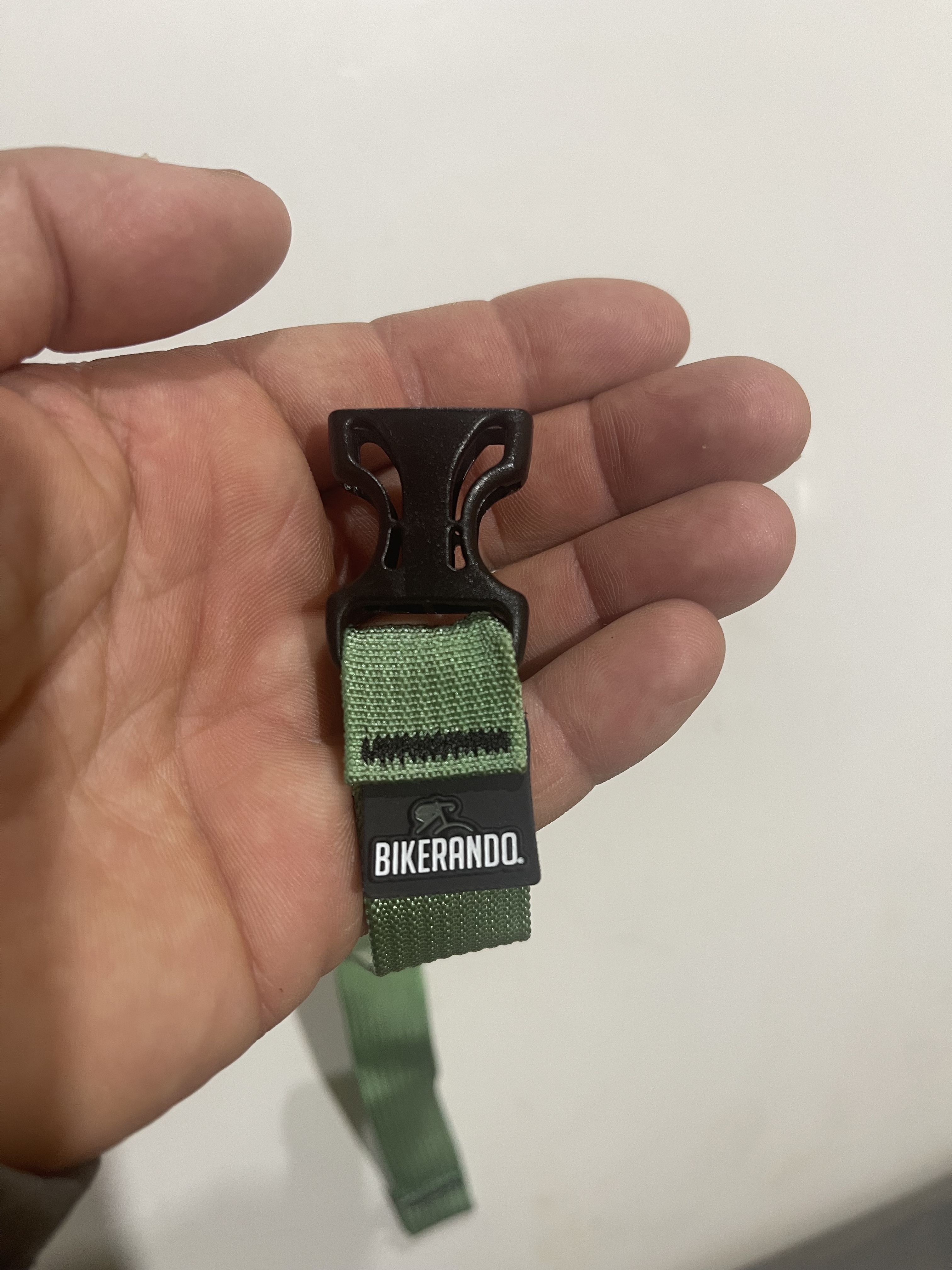
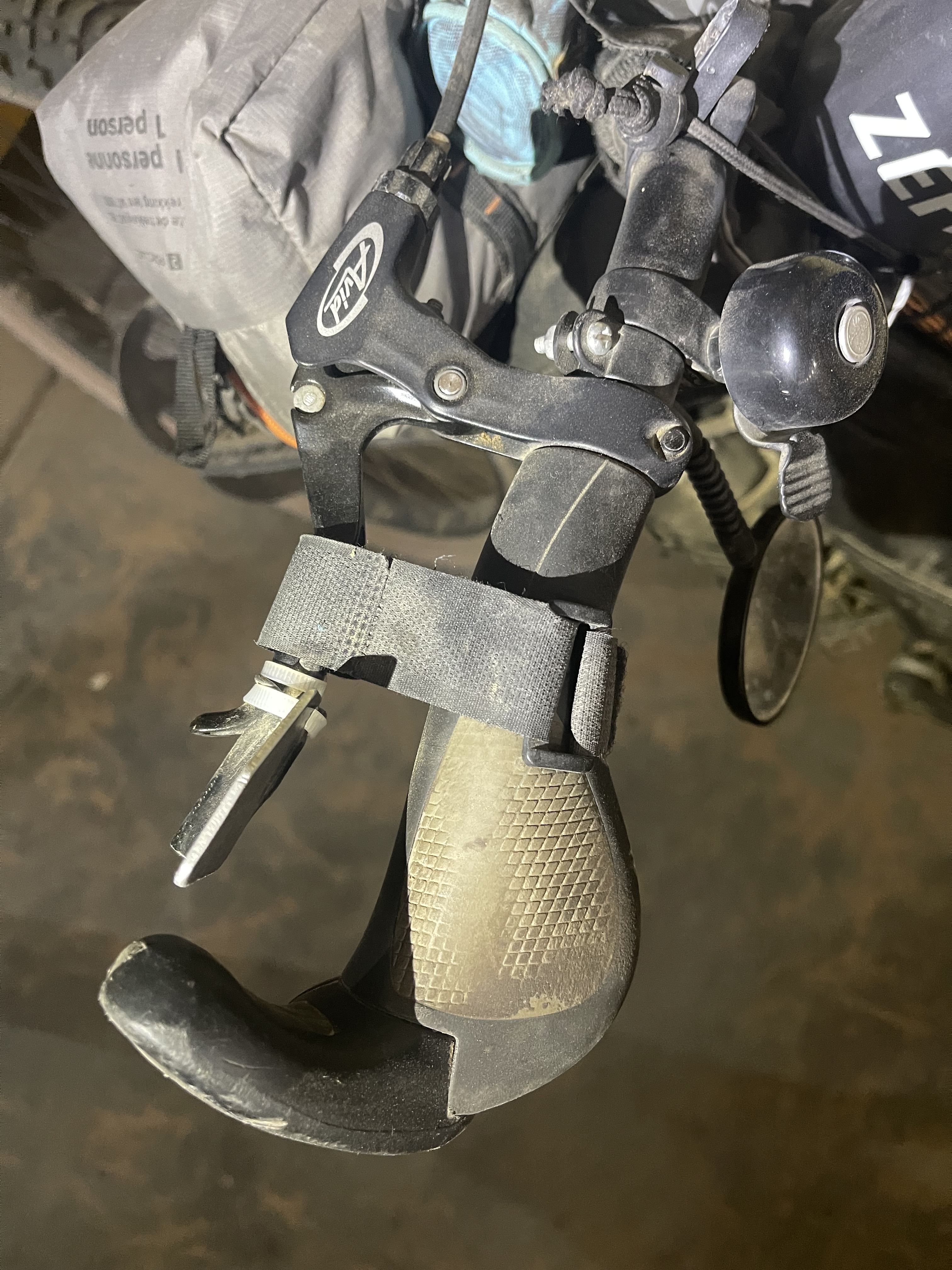
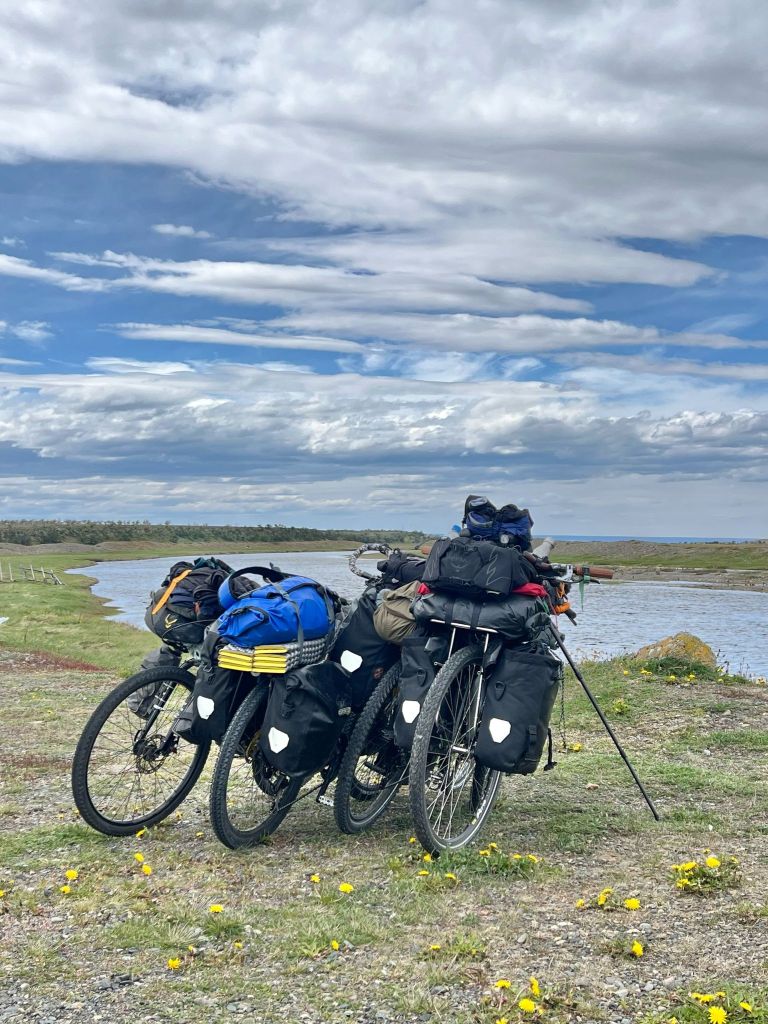
Bikerando claims that one BIRI can support up to four bikes leaning on each other—and we believe it! It’s easy to see how much this stand can handle just by looking at how tall it is and the angle it forms with the ground.
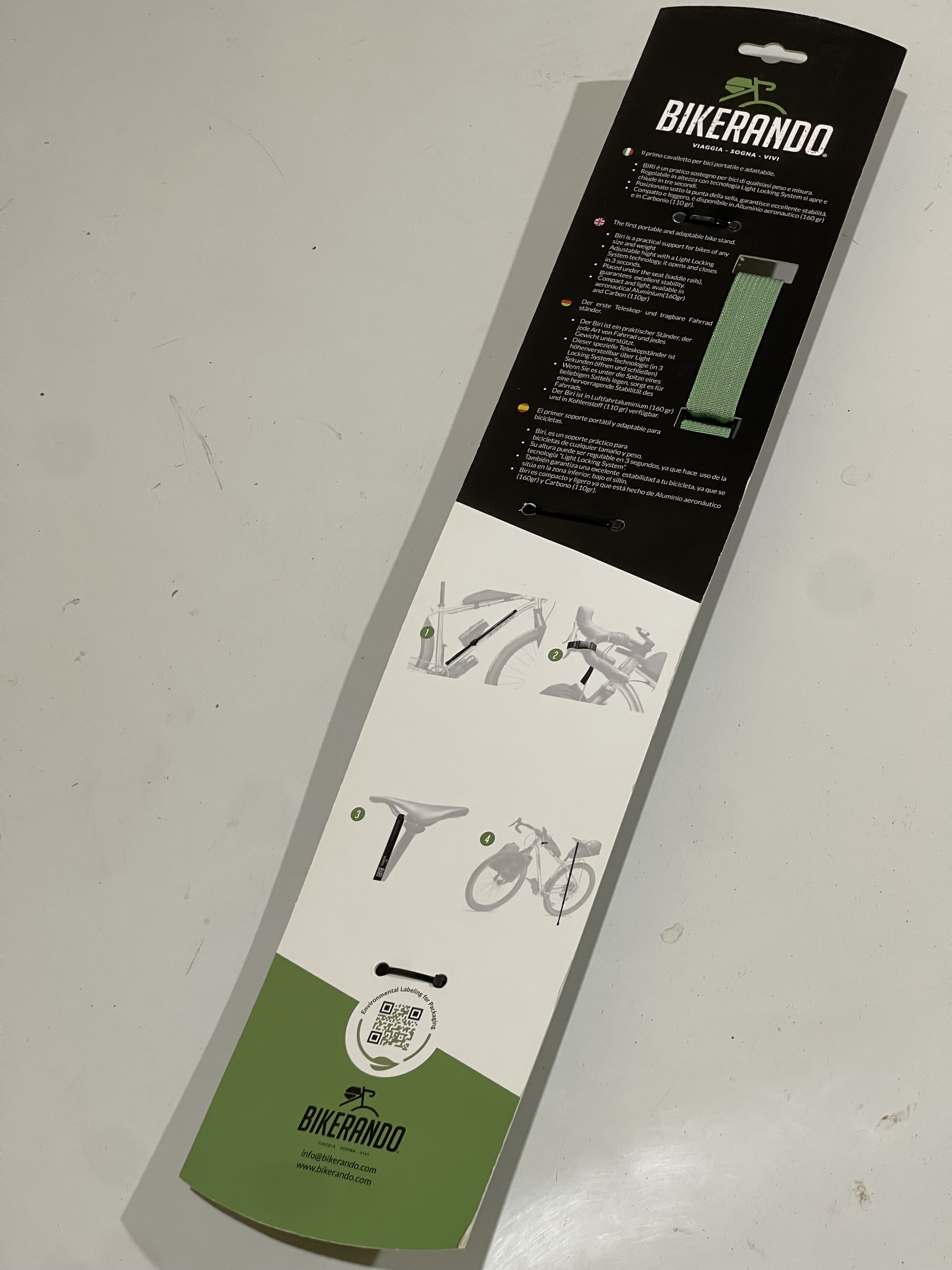
How does it attach to the saddle? Super simple.
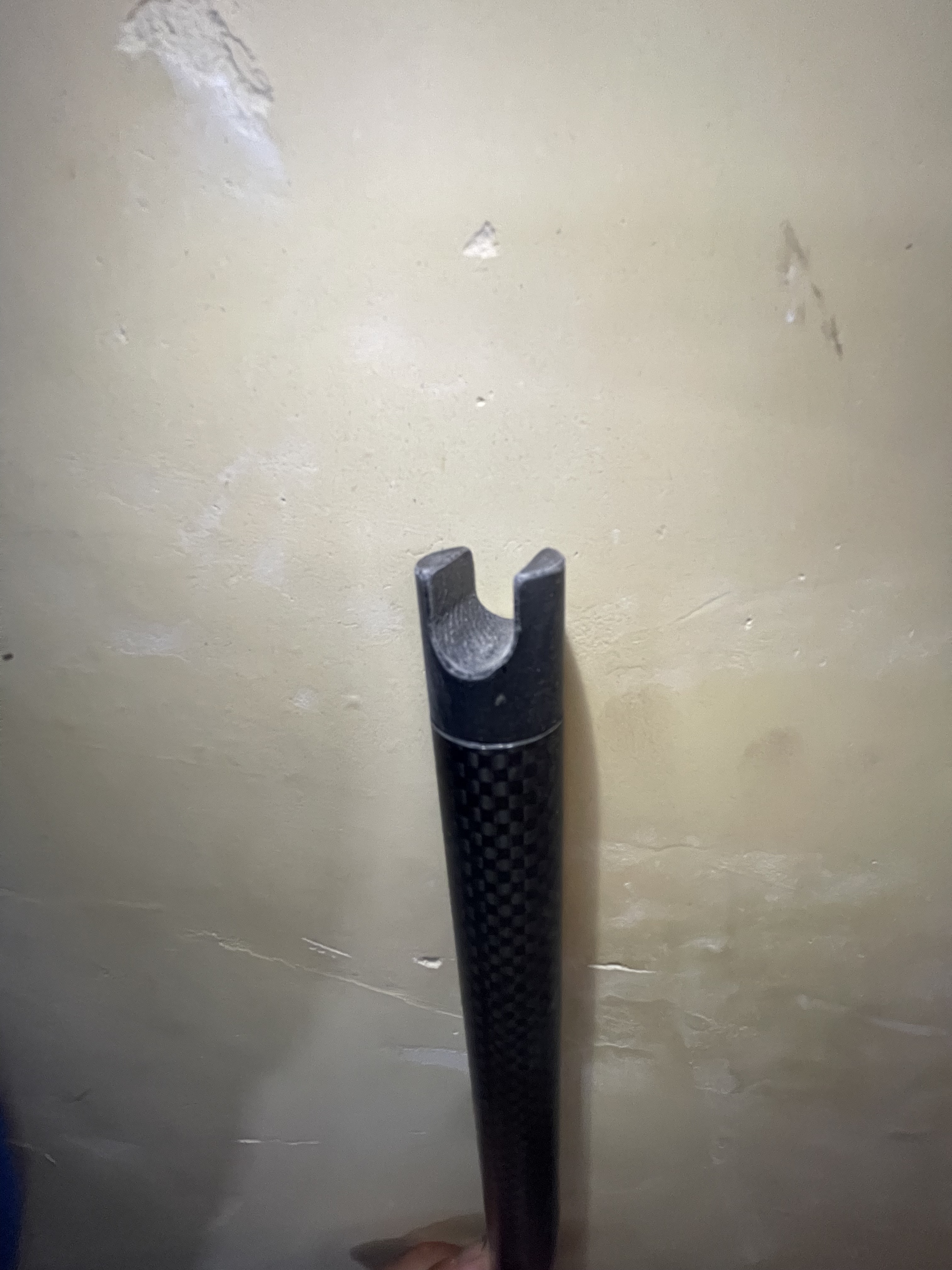
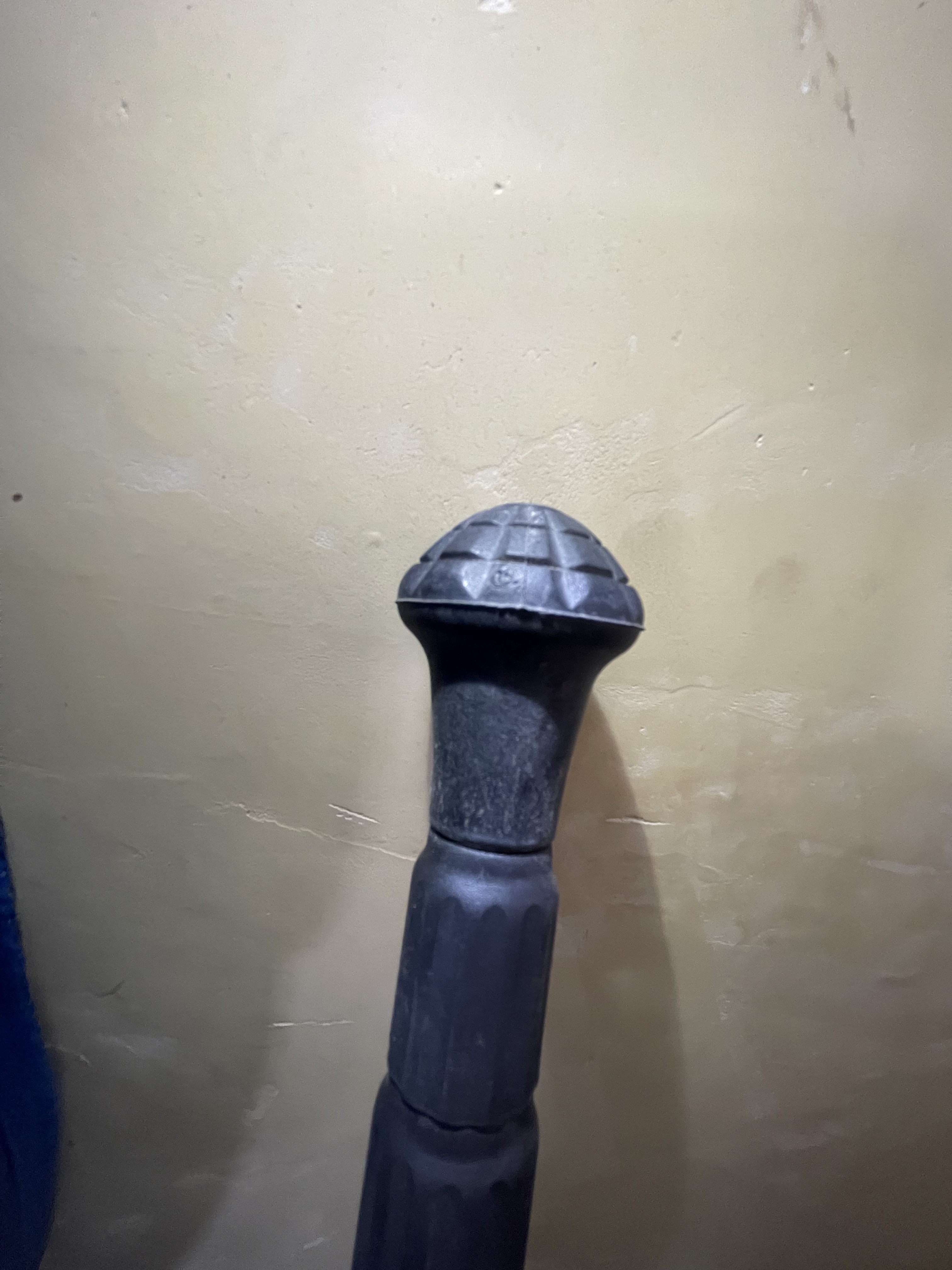
One end of the telescopic stick is grooved to fit the support frame tubes beneath the saddle. The other end features a wide rubber ball that grips securely on hard surfaces and won’t sink into deep sand.
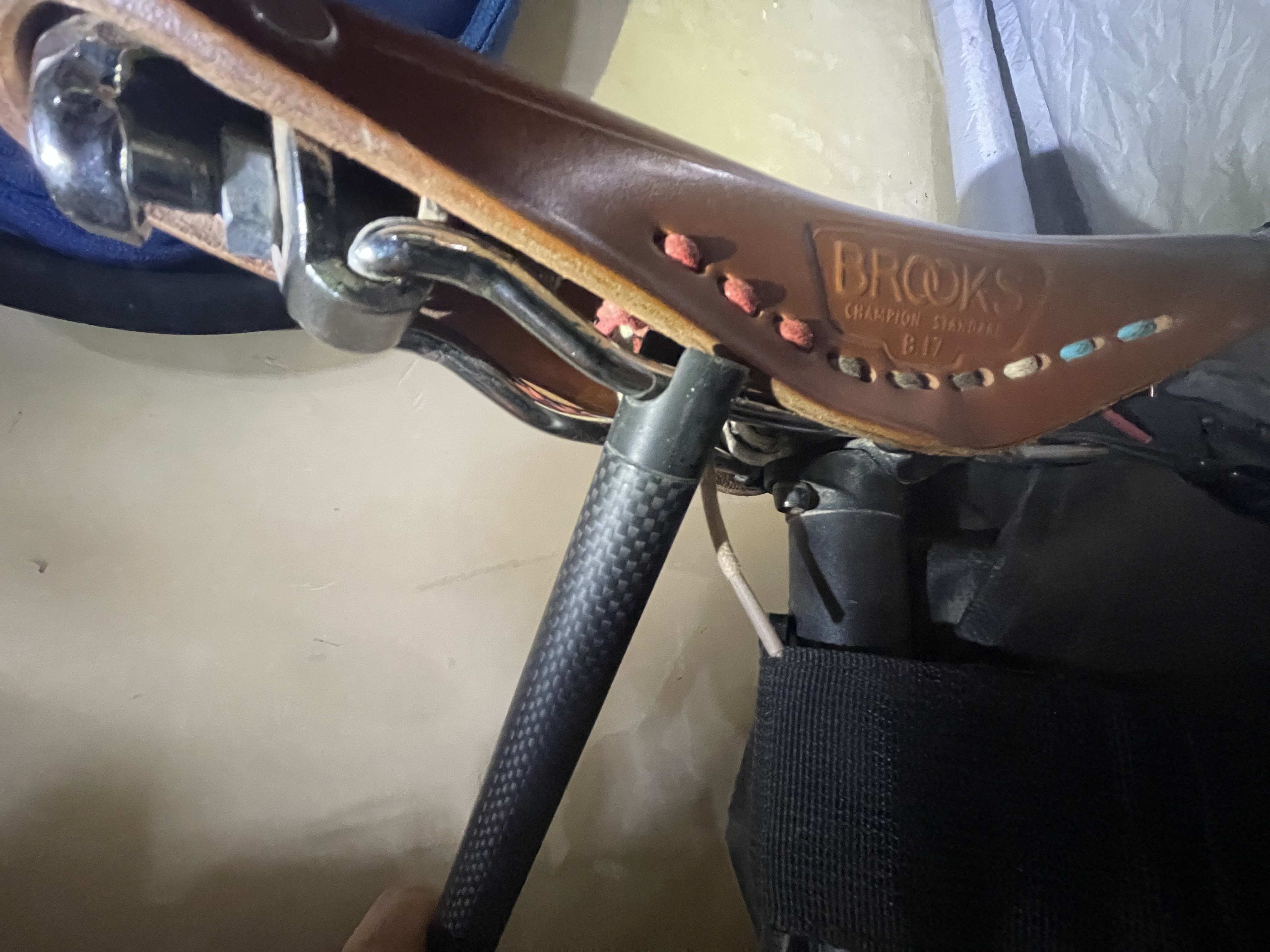
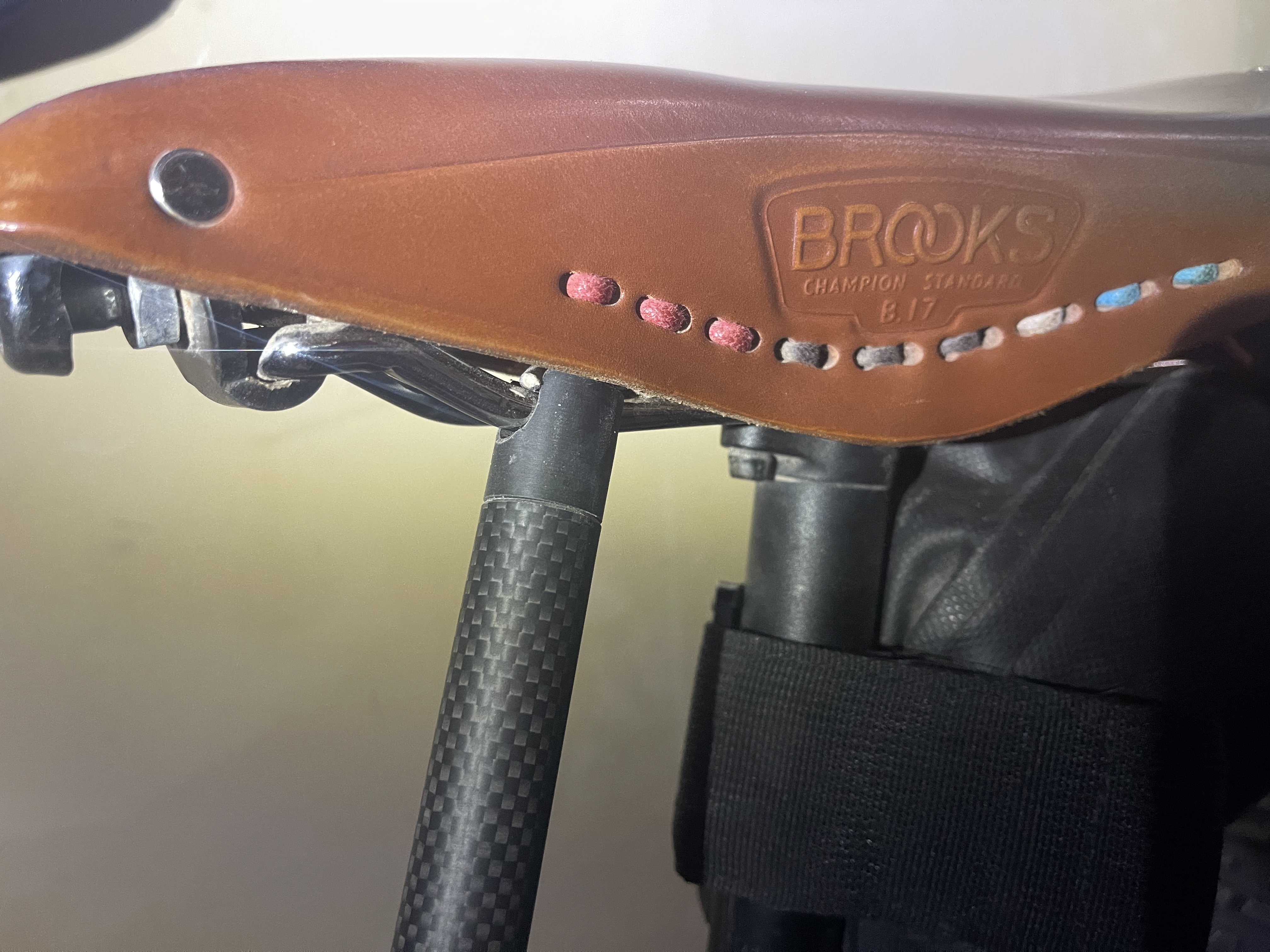
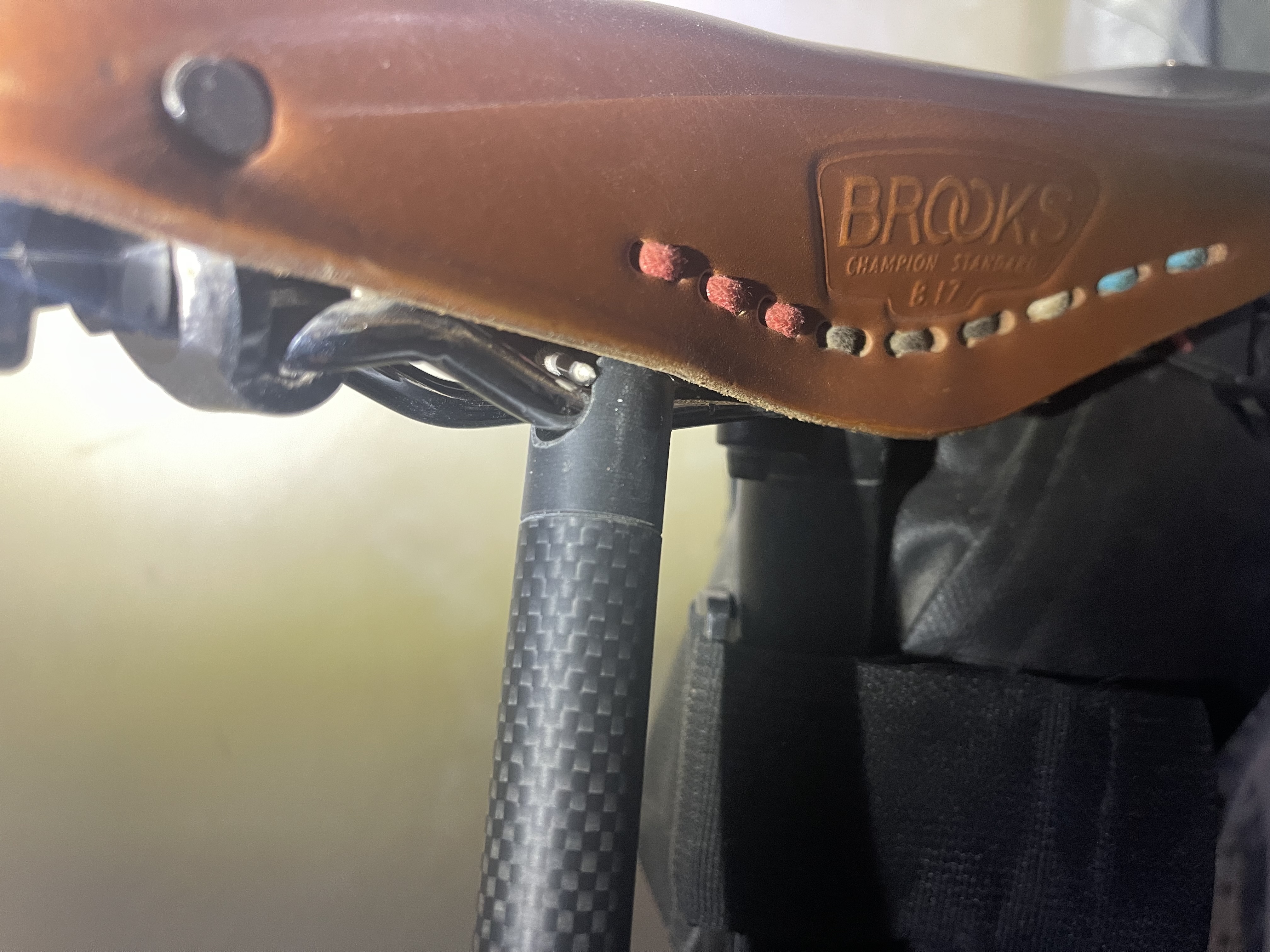
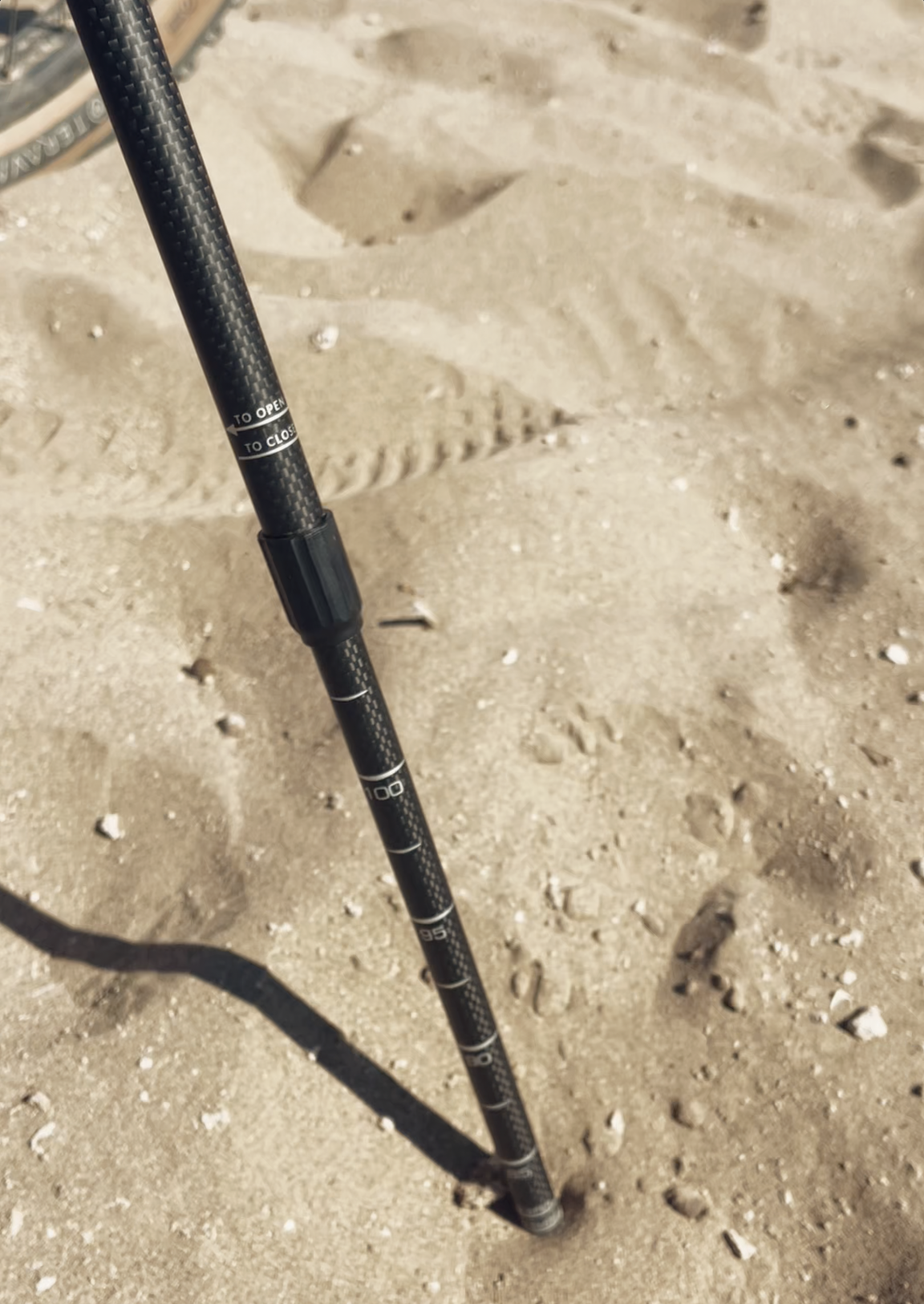
The side effect of the bike’s weight is now controlled—just like when you balance your rig almost vertically using one hand on the saddle. This balancing act causes a front-back push that makes the bike roll. To stop this, Bikerando’s clever idea of a hand brake strap comes into play. By clipping the strap around one of the brake levers and securing it to the handlebar, the brake stays engaged, preventing any forward or backward movement. Now your bike becomes a safe, sturdy station to work on—whether you’re packing, unpacking, making repairs, or just leaving it there while you head to the bathroom, go shopping, or sleep.
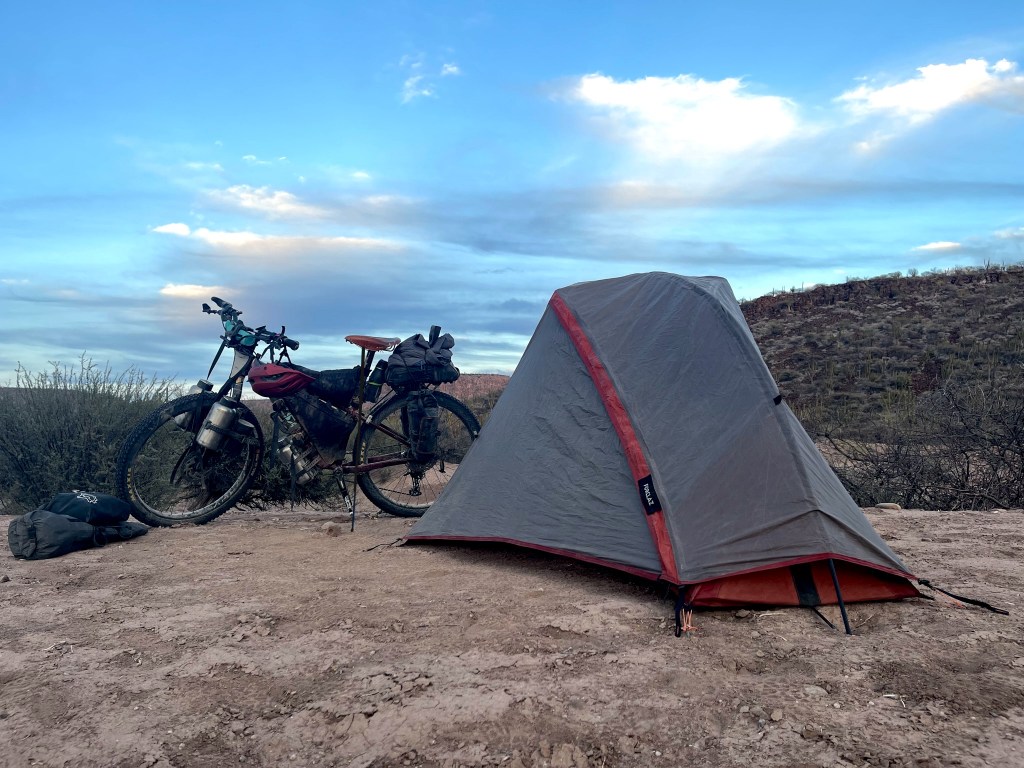
The bikestand pole come with markers to see and remember the length and maximum extension limits and the setup process takes literally under 30 sec the first time and close to 5 sec once you get used to it.
So now that we have this portable, artificial “wall” to lean our bike on, the question is…
Do we really need to carry this product on a trip to Baja?
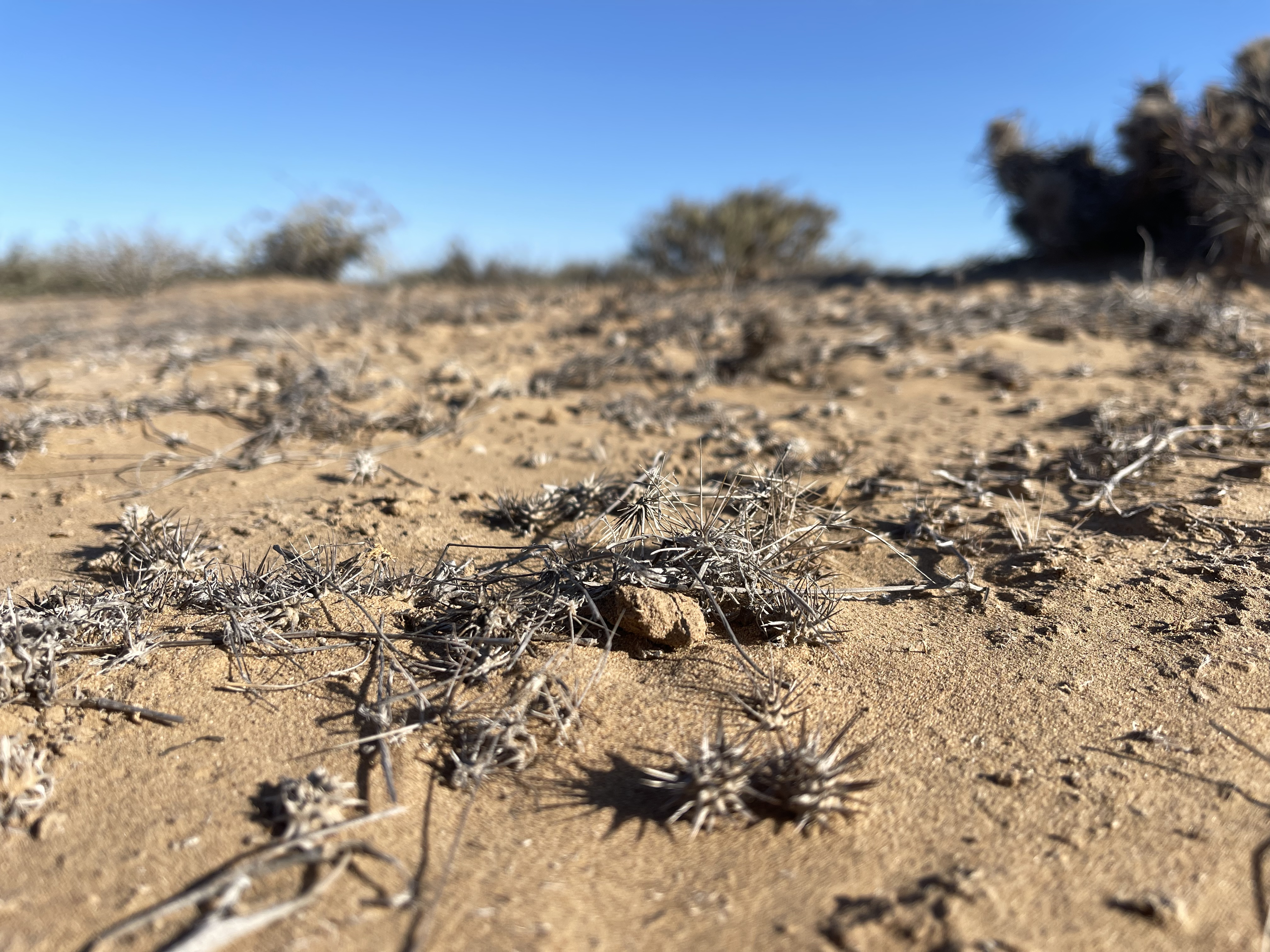
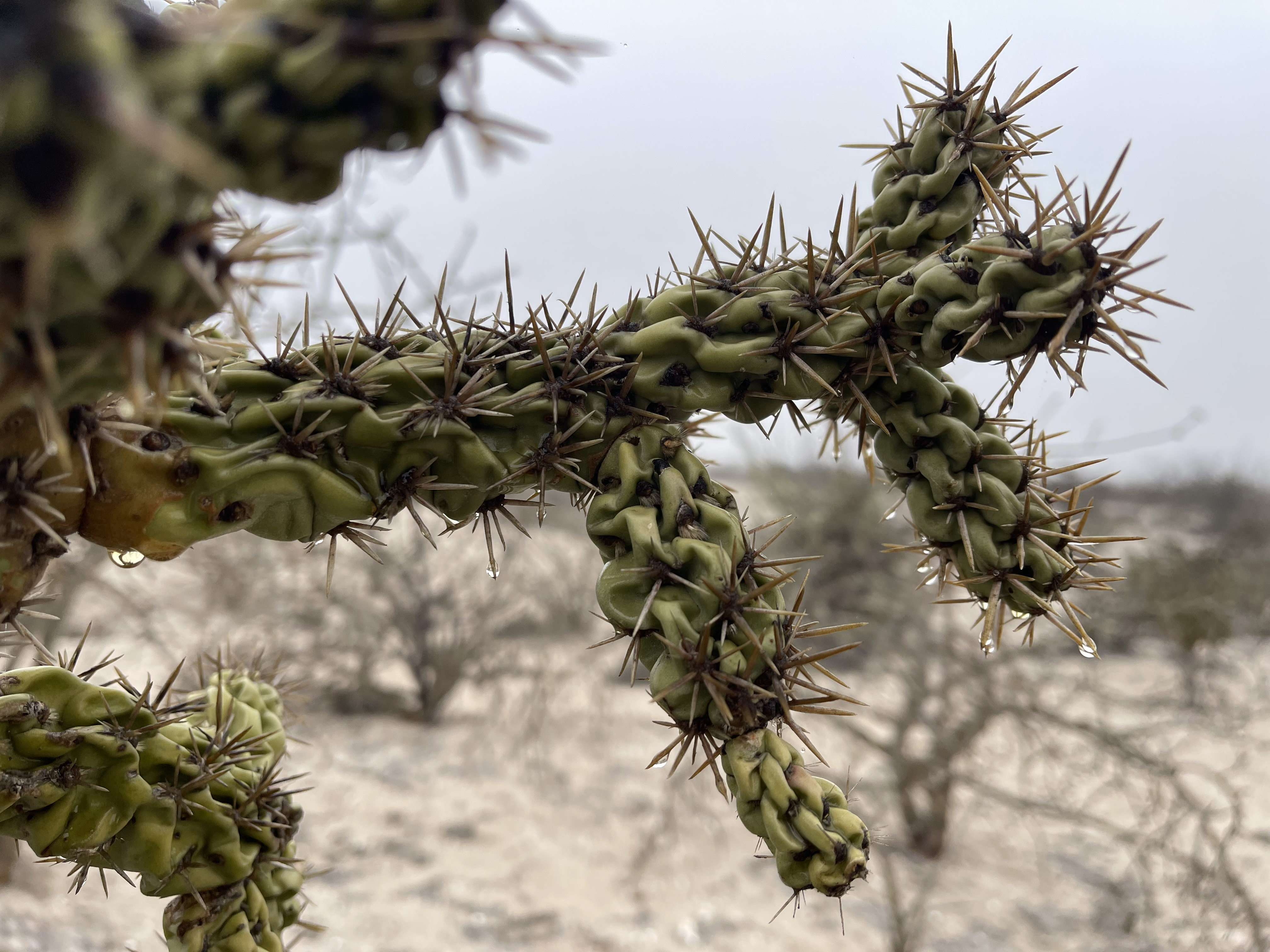
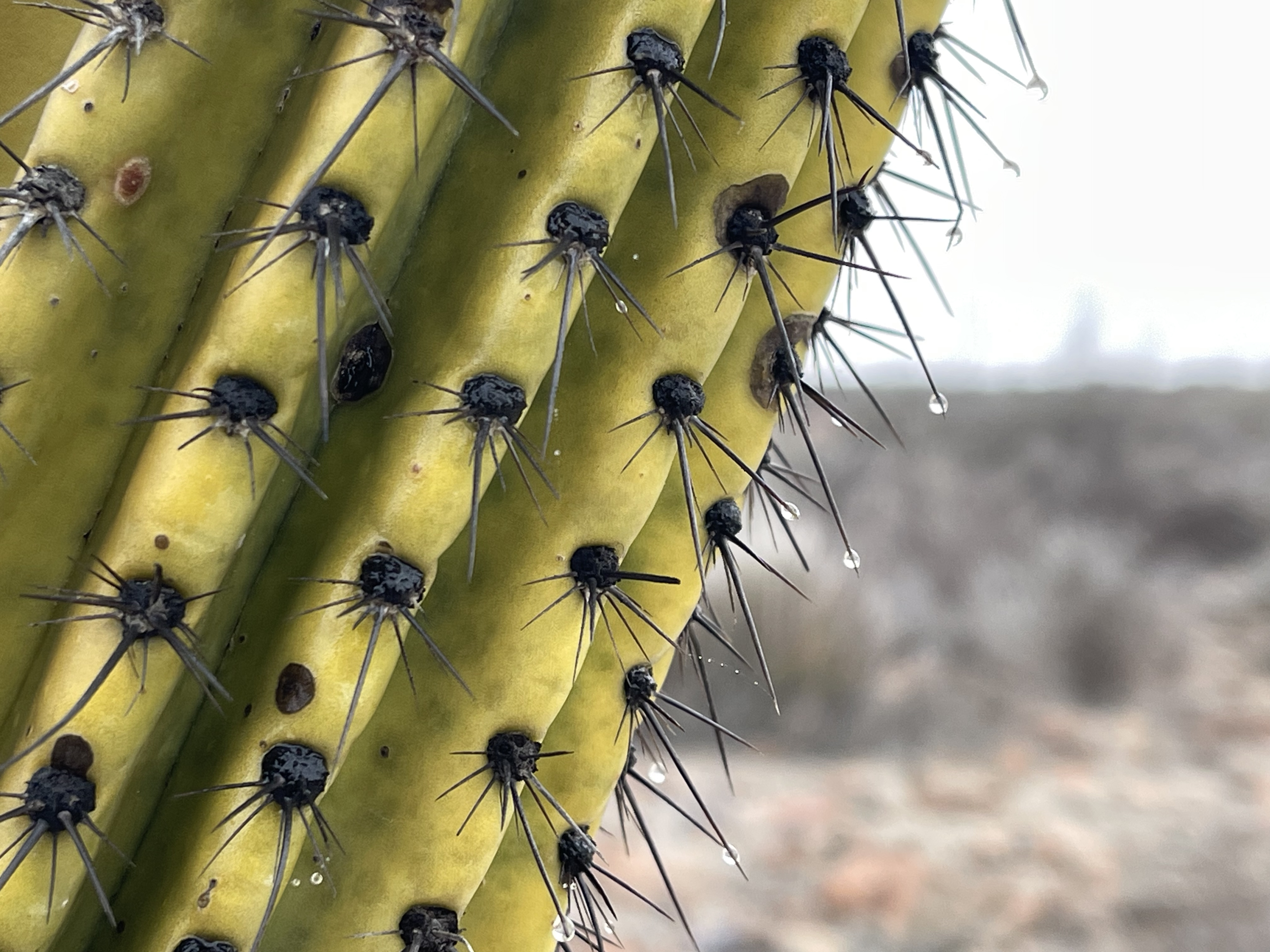
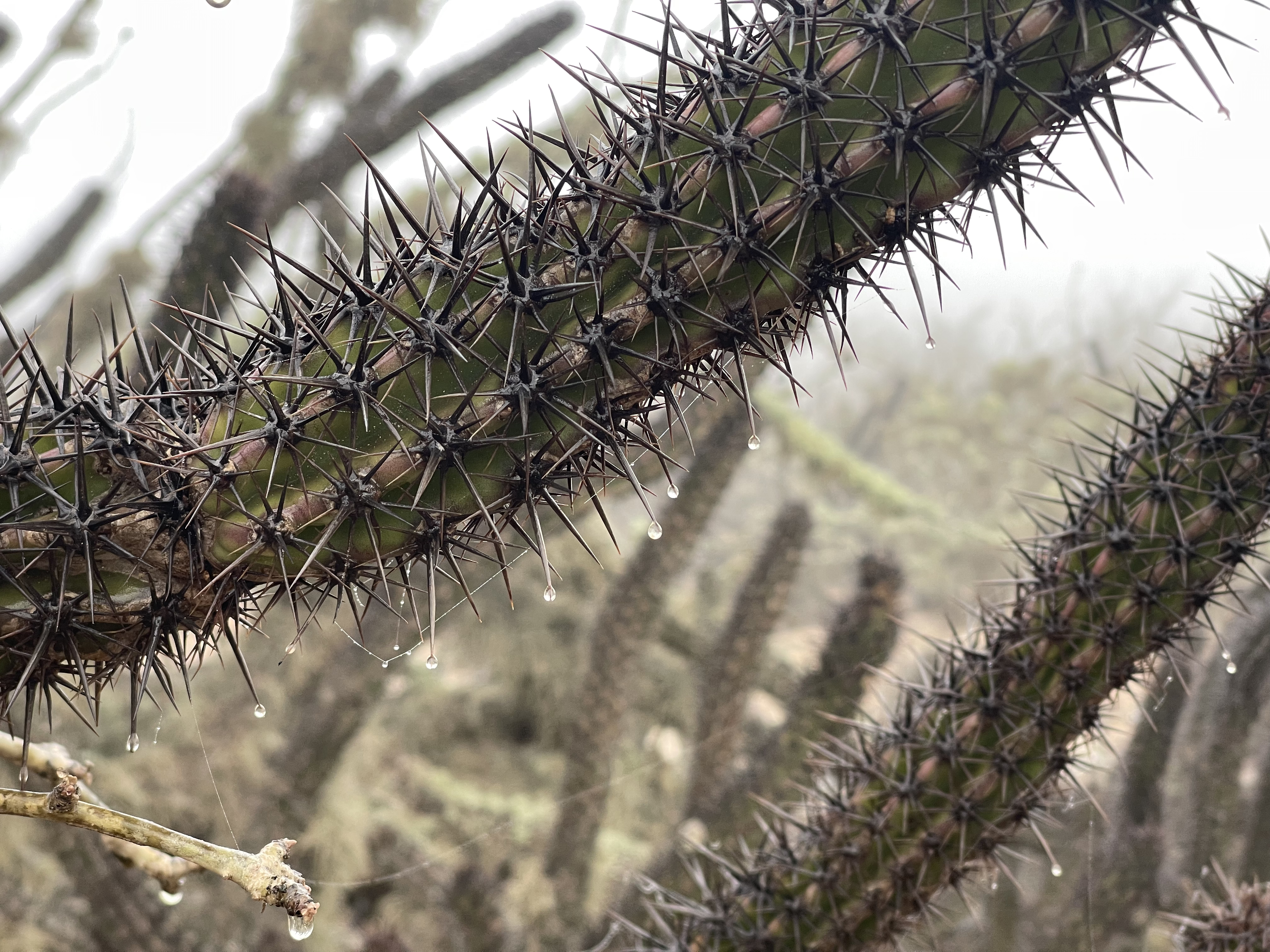
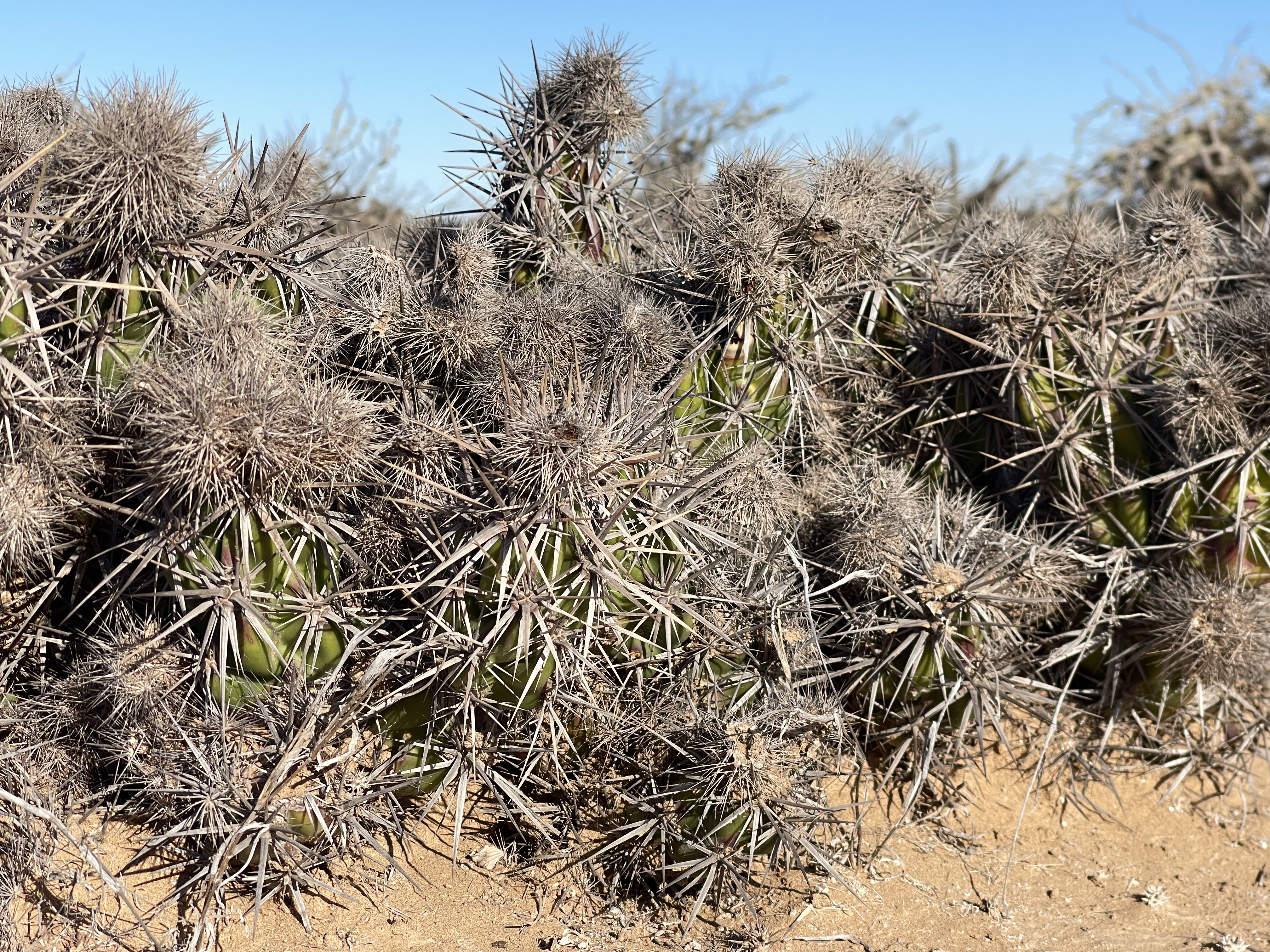
Baja offers no friendly leaning options. The ground is often covered with camouflaged dry twigs, and any seemingly robust piece of vegetation is 90% of the time coated in the most peculiar kinds of thorns—ranging from kitchen-knife-sized to completely invisible and undetectable.
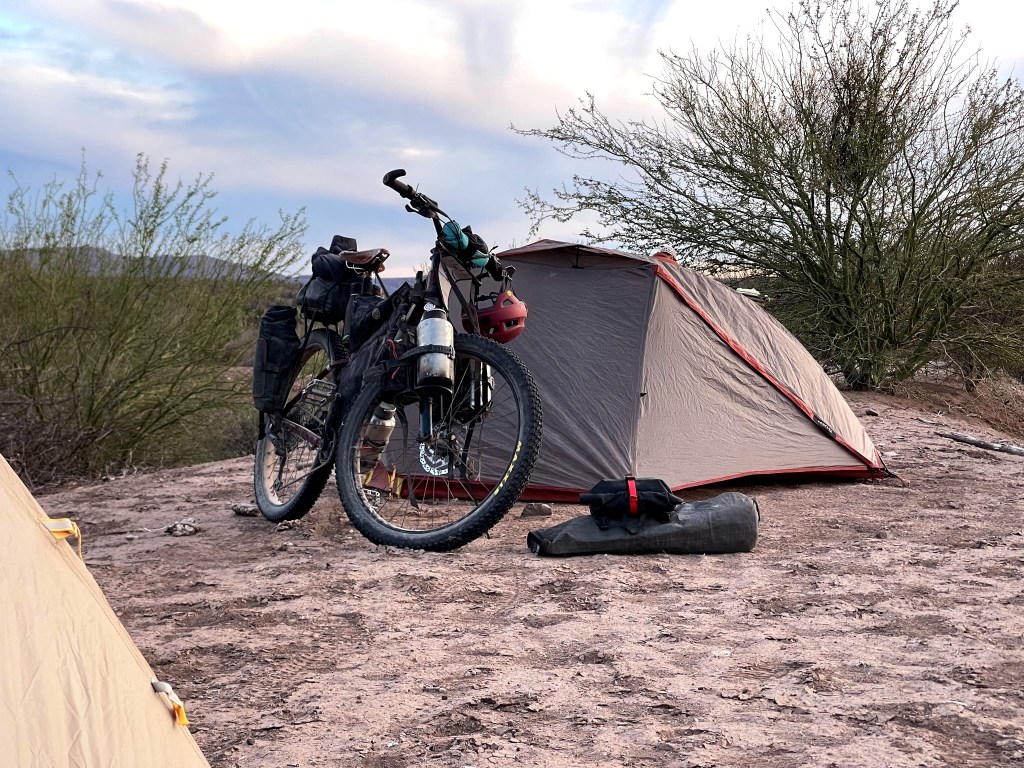
Any other type of not deadly tree that looks like a promising option is usually just an extremely flexible bush that only makes things harder and more frustrating. Building walls and fences are rare along the remote Baja Divide or on most routes across the peninsula. And to make things worse, there’s always a good chance of strong gusts of wind hitting you and your rig the moment you let your guard down.
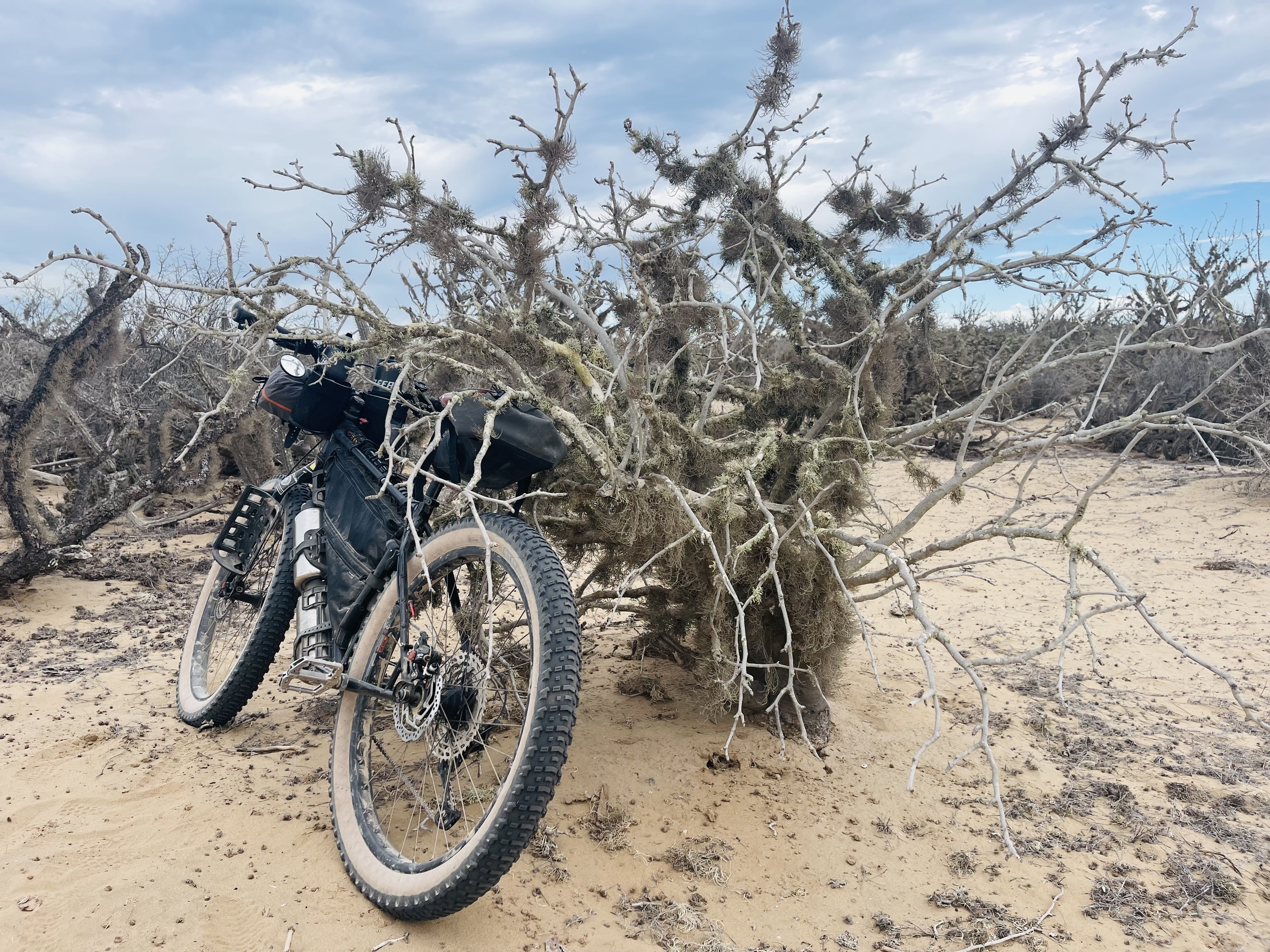
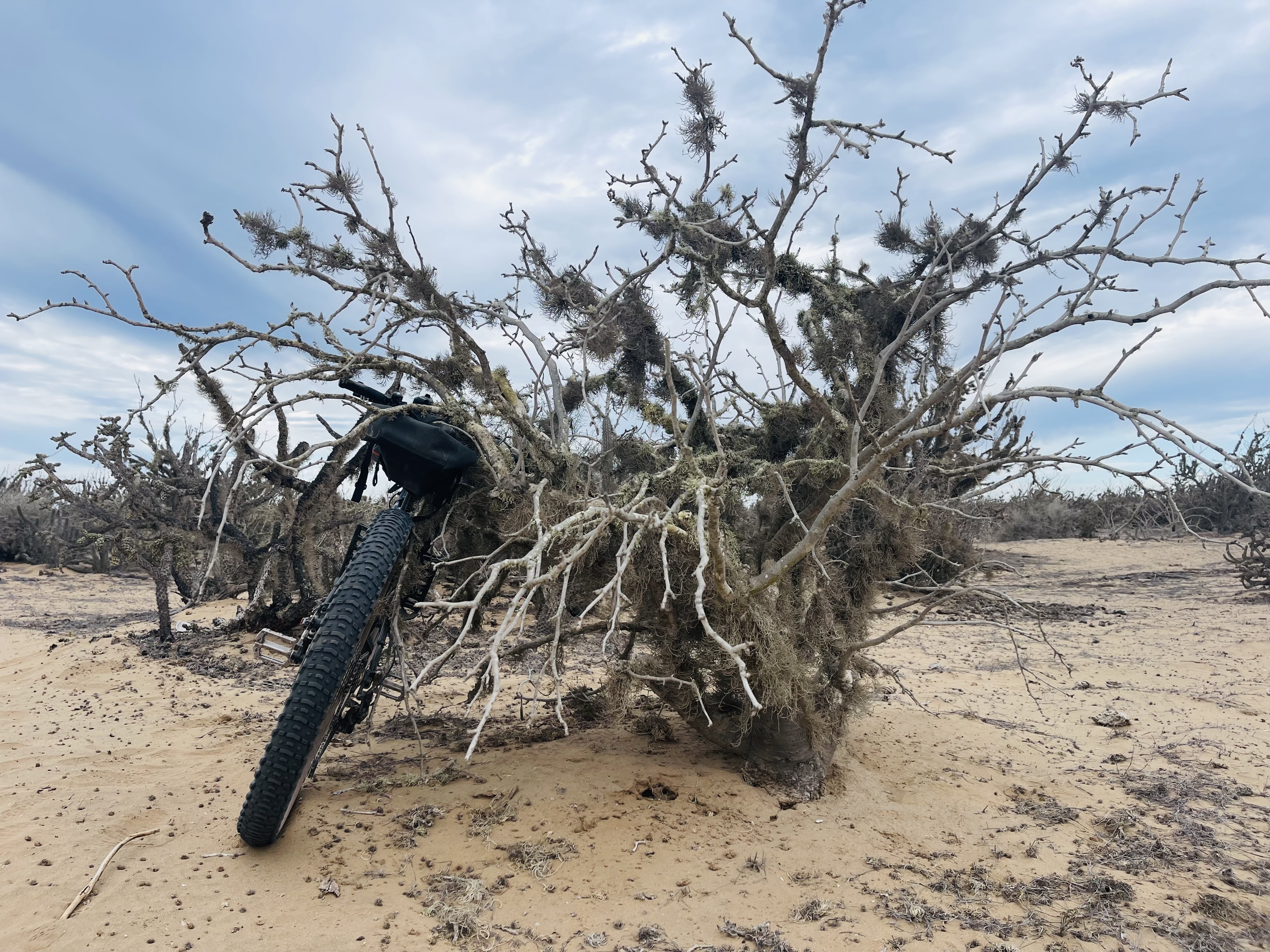
Plus, rigs are usually much heavier than usual due to the extra water riders are forced to carry to battle the desert climate and the long remote stretches of route without resupply options. Leaning such weight on the ground and lift it every time is not a pleasant task.
So yes—we highly recommend bringing a BIRI bike stand with you in Baja because probably Baja is where this gadget comes more handy than anywhere else in the world!
It’ll give you peace of mind, allowing you to rely solely on it whenever it’s time to lean your bike and take a break.
You can shop the BIRI bikestand on BIKERANDO‘s online store: https://www.bikerando.com/en/store/
tip:
CHARGING PORT PLUGS
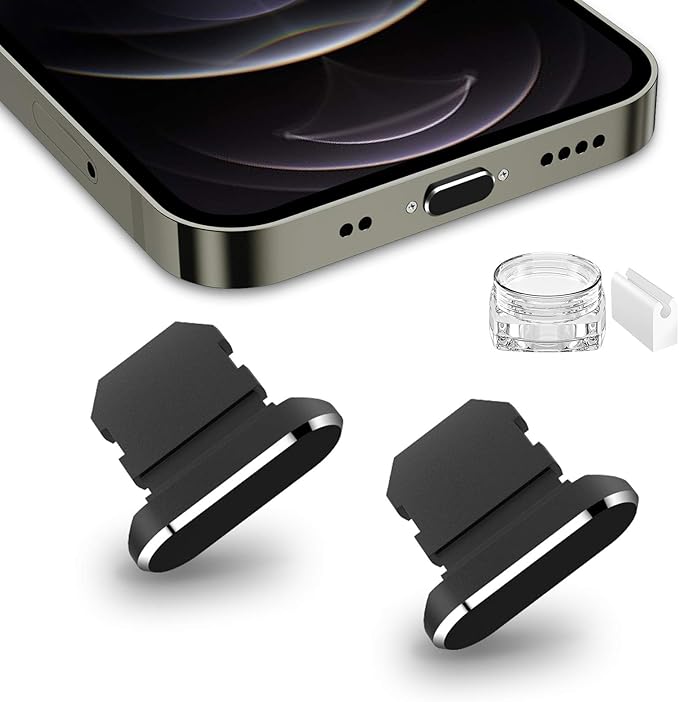
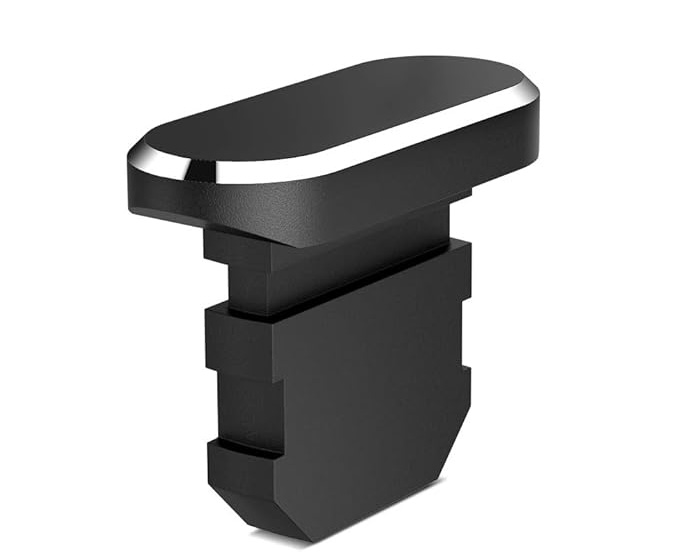
We know, we know… these days it’s all about going back to the roots—no tech, no maps, no rules. Just soul bikepacking. But for those of us who still bring a phone on our adventures—and feel a bit crushed when something happens to it because, let’s be honest, it is a valuable piece of gear—we’ve got a super cheap micro-upgrade that makes your setup just a little more BAJA-PROOF.
You know that charging port—the one you connect the charger and bring your device back to life right after it dies, usually when you’re trying to figure out if you’re still on route or way off-track? That tiny hole is a dirt magnet. Over time, enough dust and grime gets in there that your charging cable won’t fit properly or stay connected. Worse, that gunk can trap moisture, causing even more issues. Eventually it gets so compacted you’ll need a sharp object to dig it out, risking damage to the delicate internal connector. Game over.
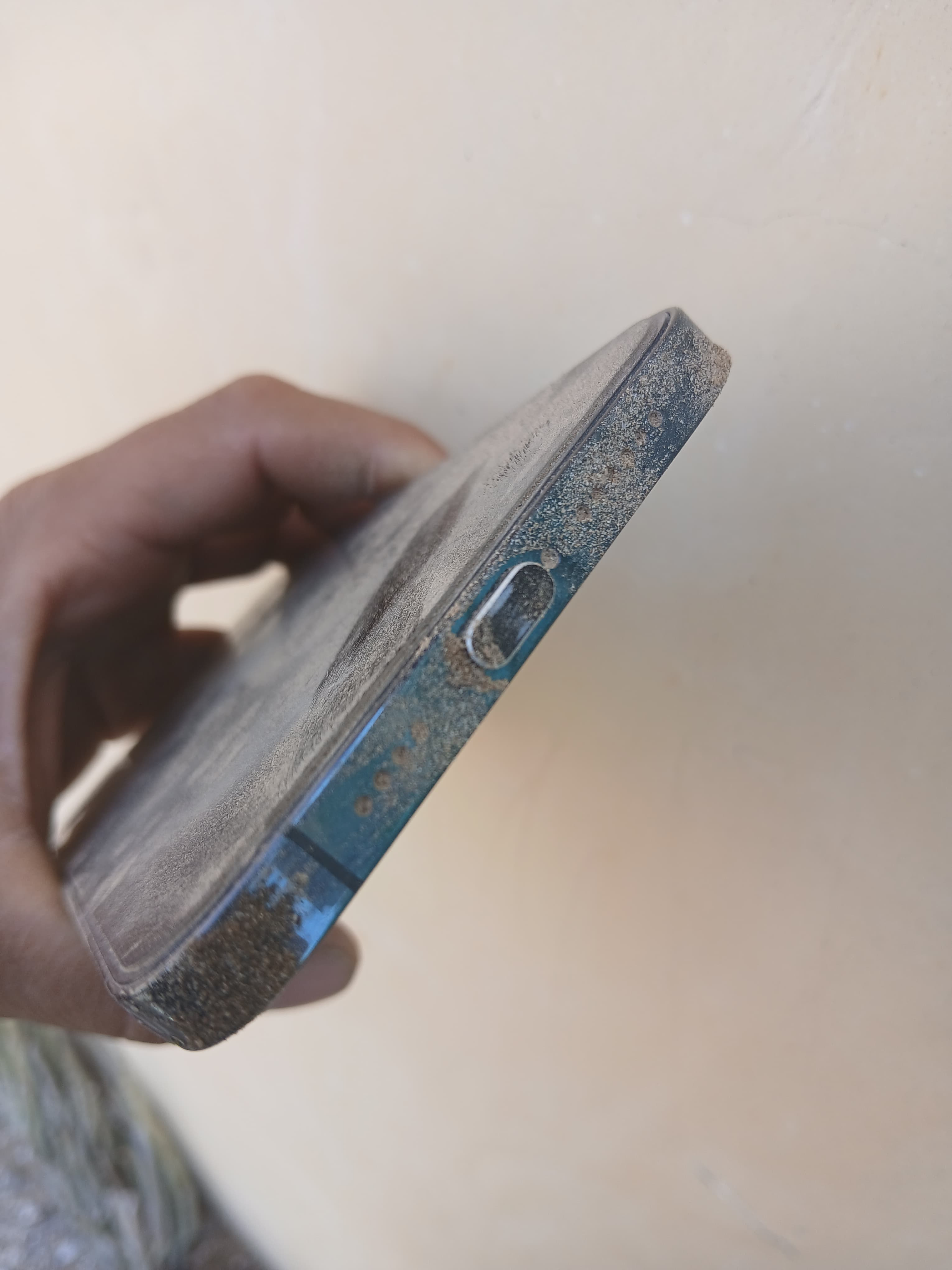
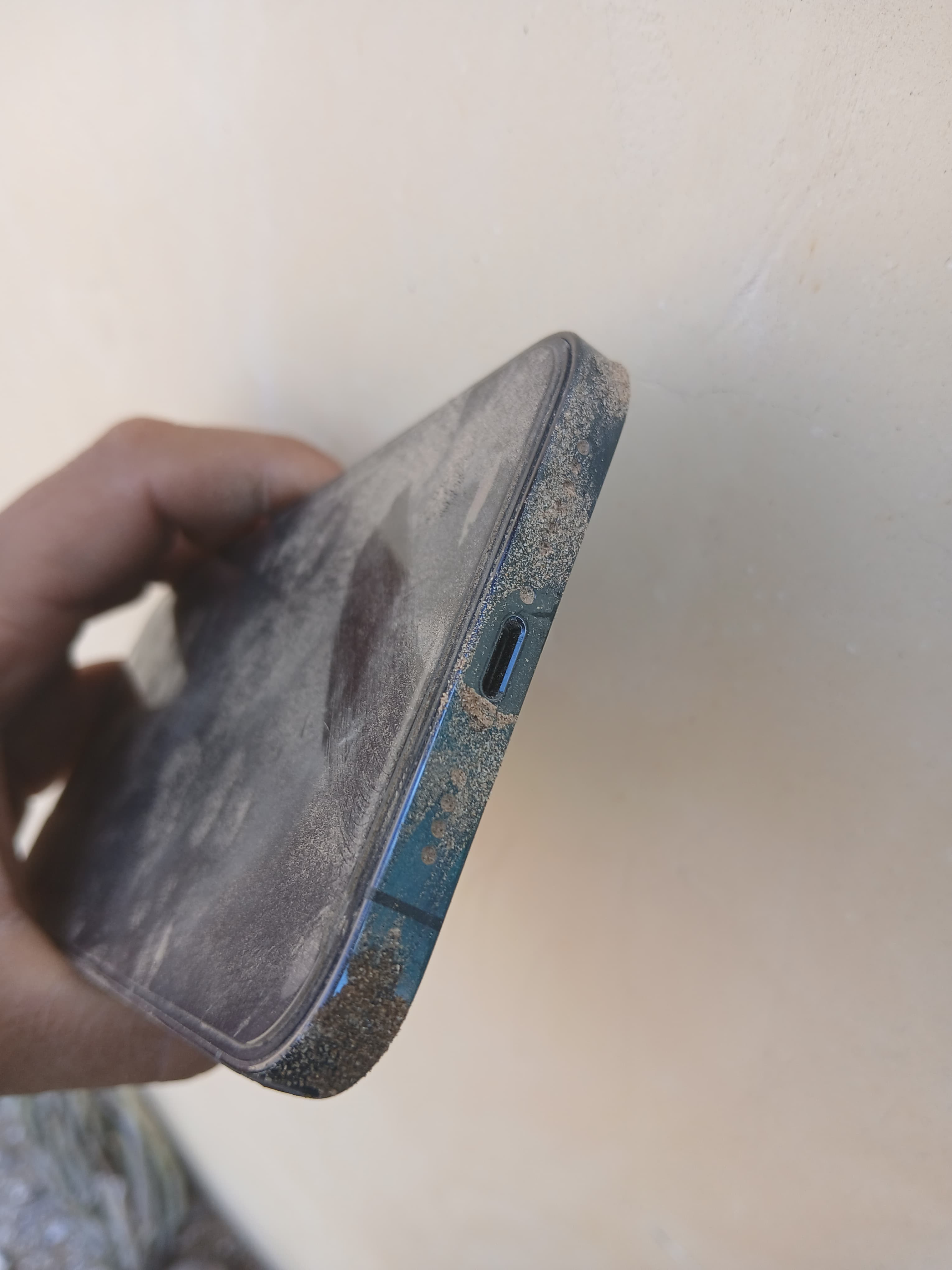
The solution? Dirt-cheap and dead simple: grab a few tiny port plugs designed to seal off your charging ports from dust and debris.
In Baja, sand and dust are like your daily breakfast cereal—they’re everywhere. Slapping one of these little aluminum plugs into every exposed port on your electronic devices brings serious peace of mind. They also help keep your gear safe from grubby hands (post-meal or post-fix) and random debris bouncing around in your pack. See port plugs here.
product:
SQUIRT DRY LUBE

This wax-based dry lube is, hands down, the best solution for riding in Baja. We’ve used it on countless trips and daily rides—through sand, water, dirt, and salt—and it’s never let us down.
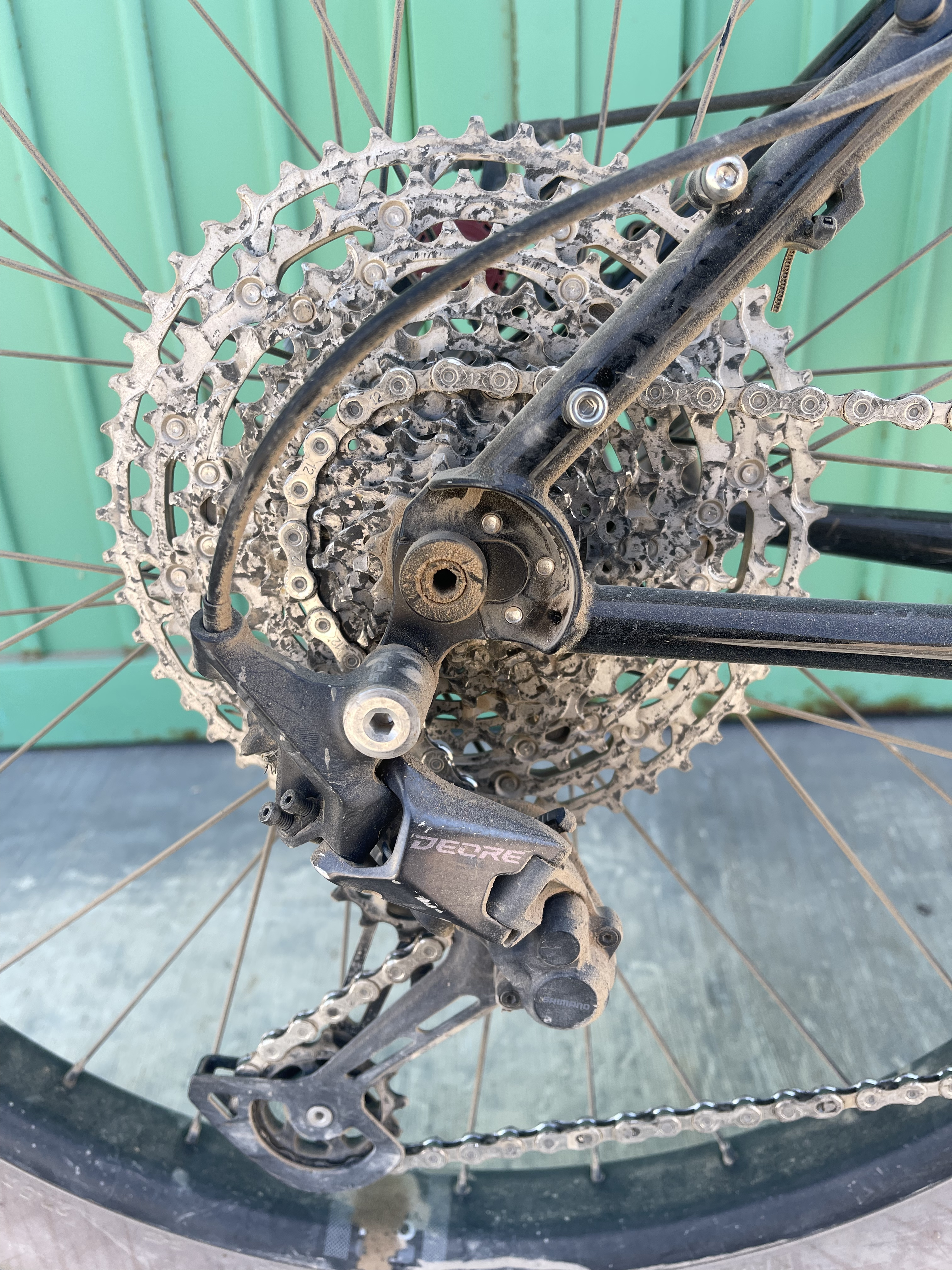
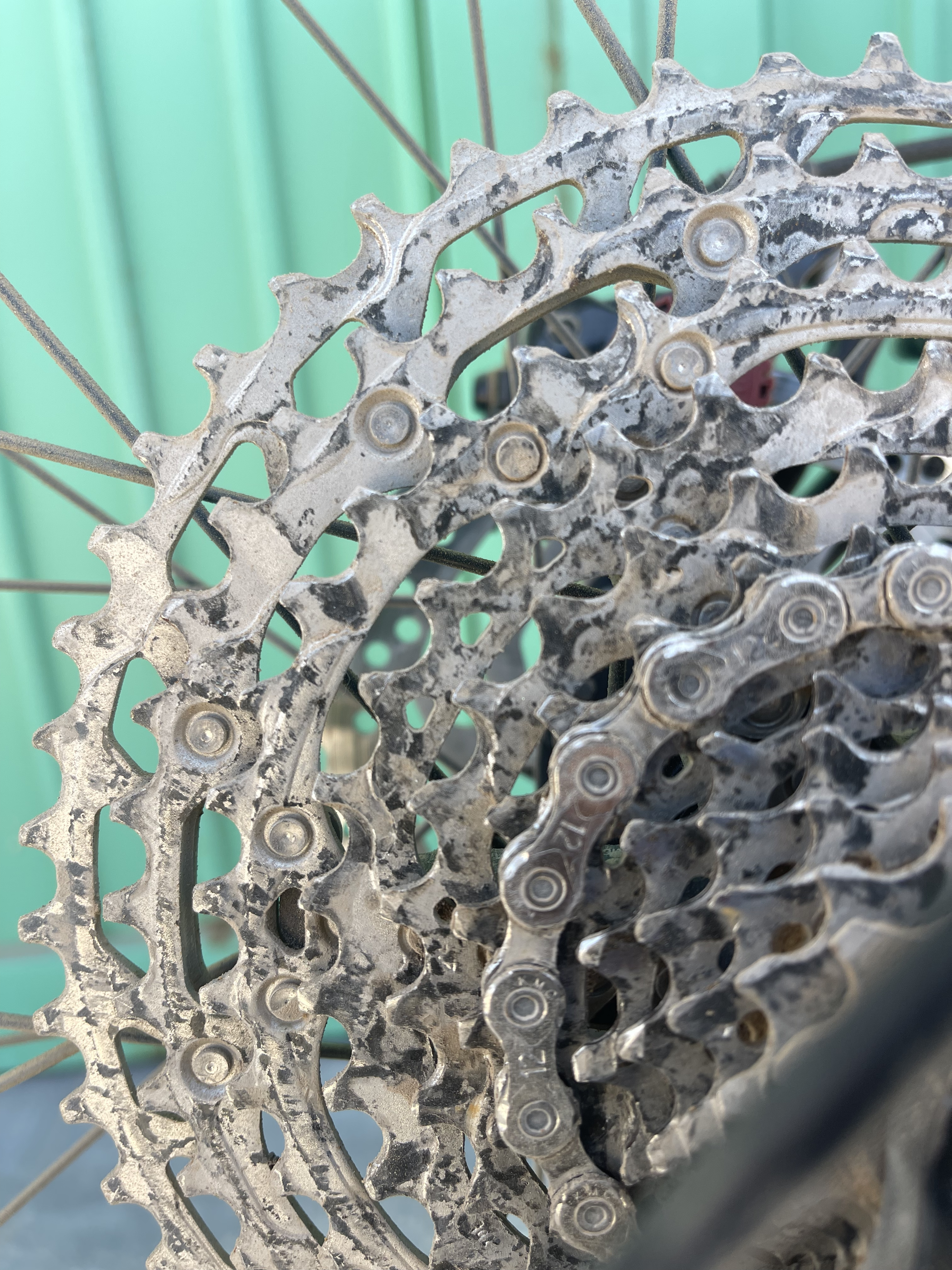
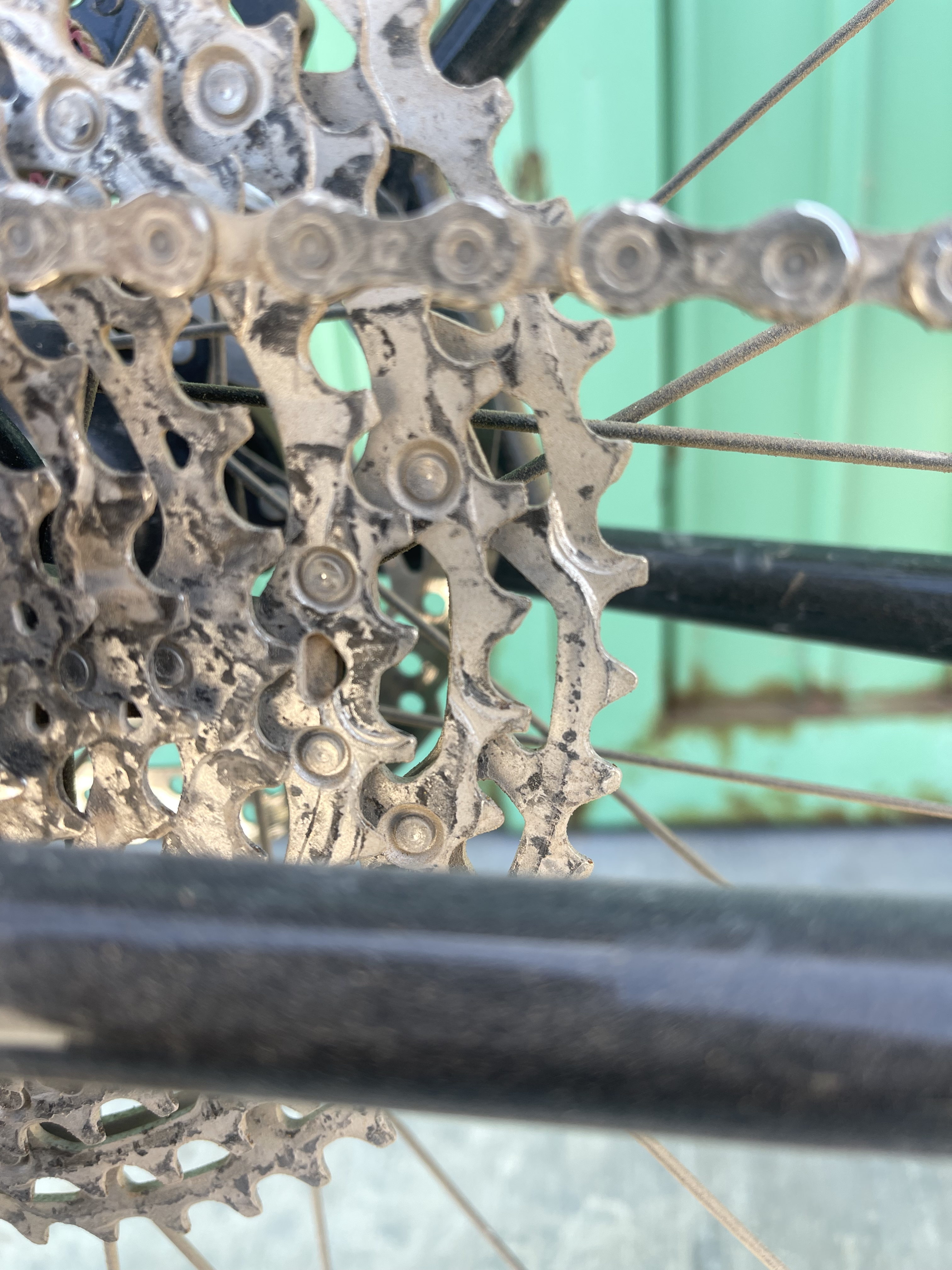
It’s honestly impressive how clean the entire drivetrain stays, even after thousands of miles, just by using Squirt. A quick squeeze each morning on multi-day trips, or once a week for your everyday rides, is all it takes to keep your bike running smooth and feeling great.
But this lube isn’t just for drivetrains—it works wonders on zippers too. All zippers. Tent doors, bags, jackets… just add a drop or two inside the slider, and the zipper will glide better than it did brand new. You can also apply it with your fingers by rubbing it along the teeth.
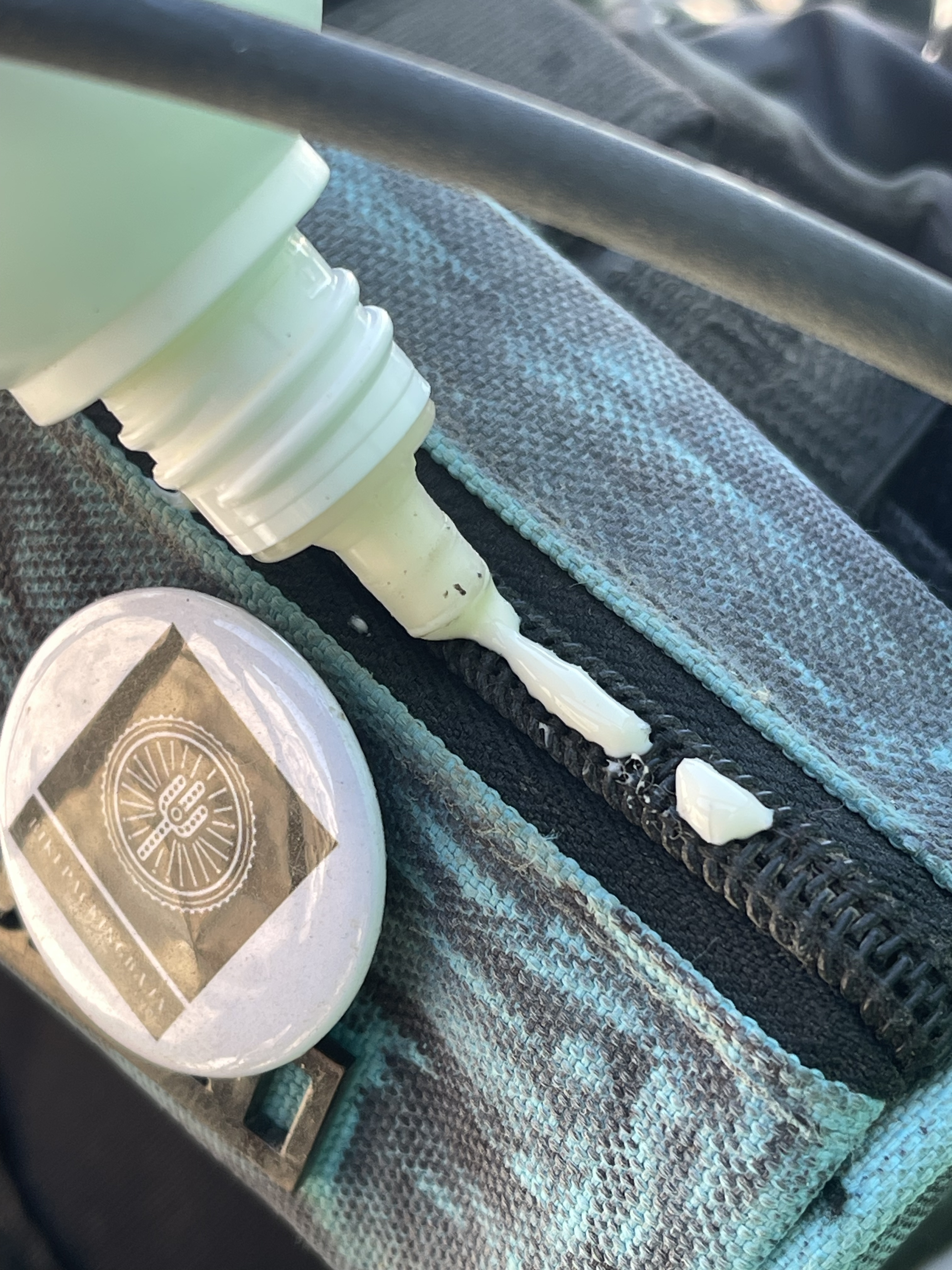
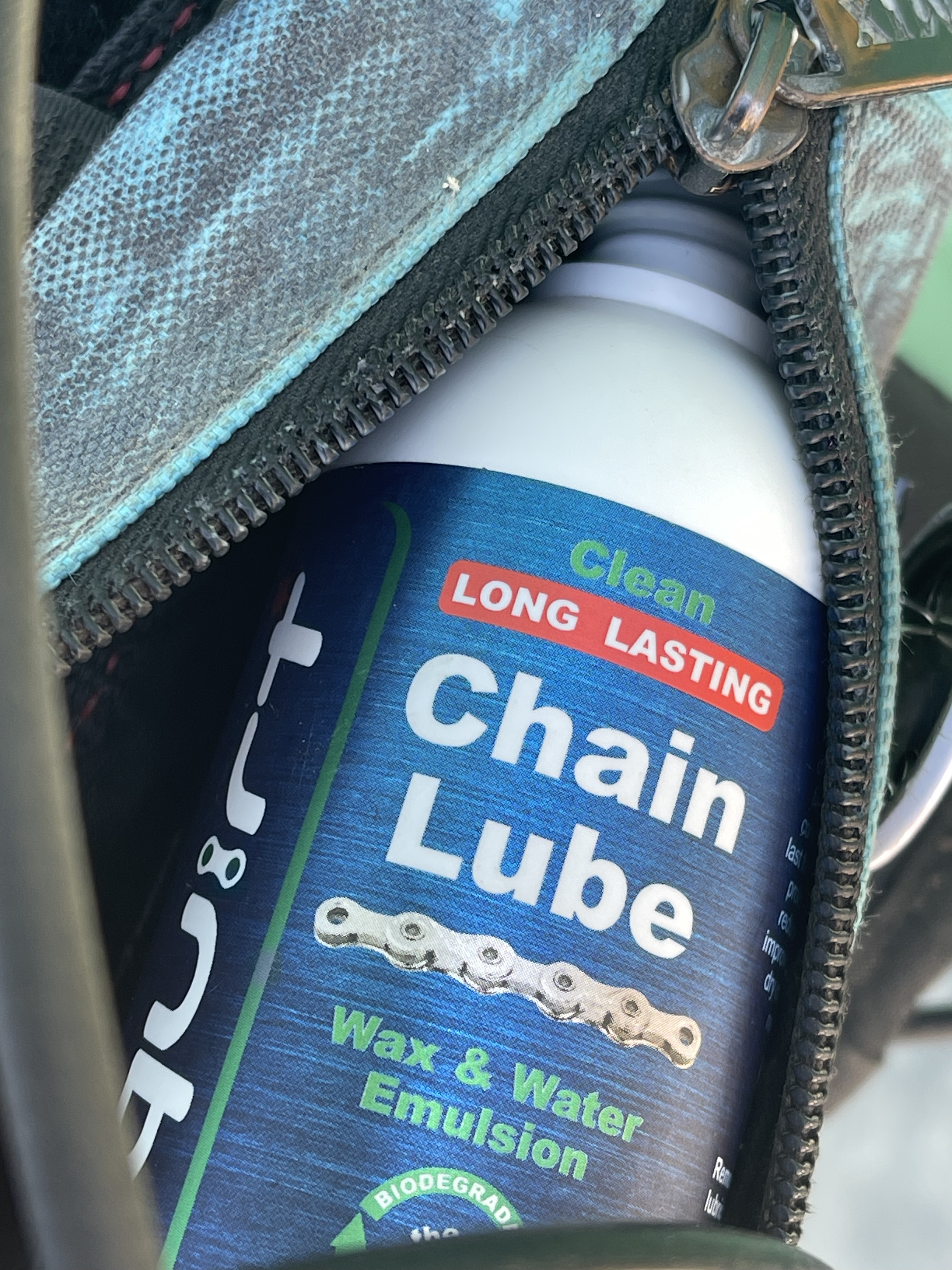
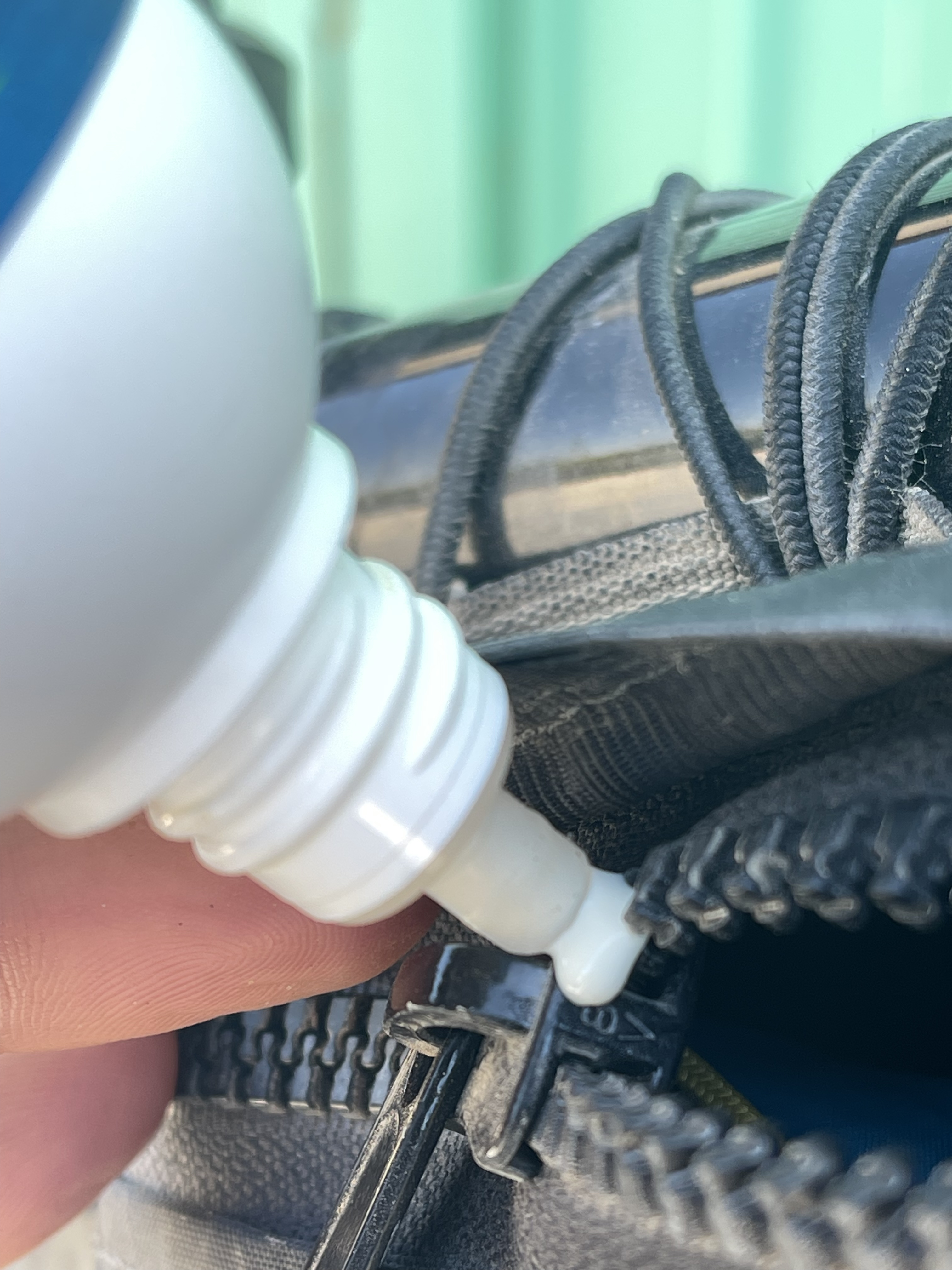
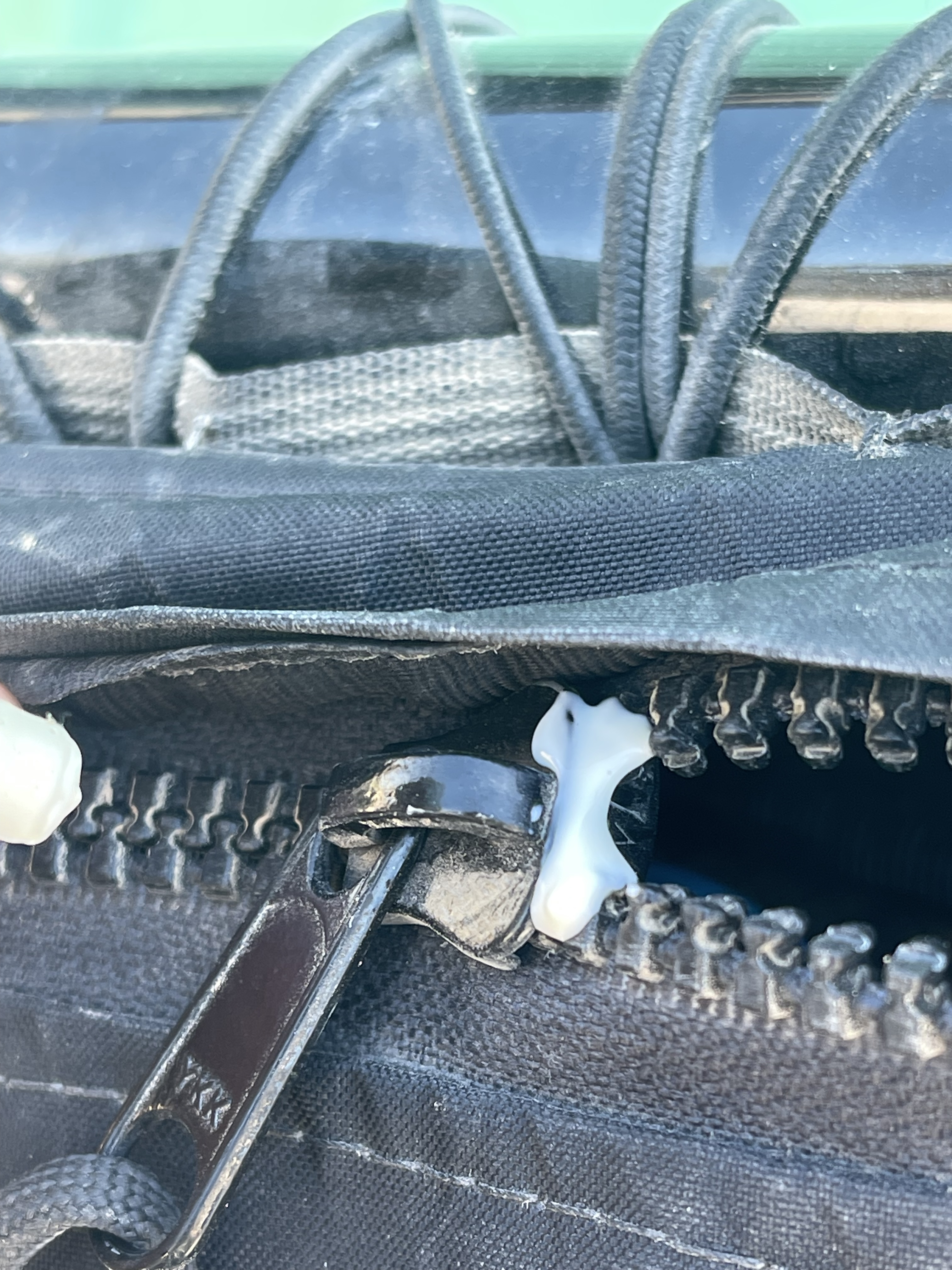
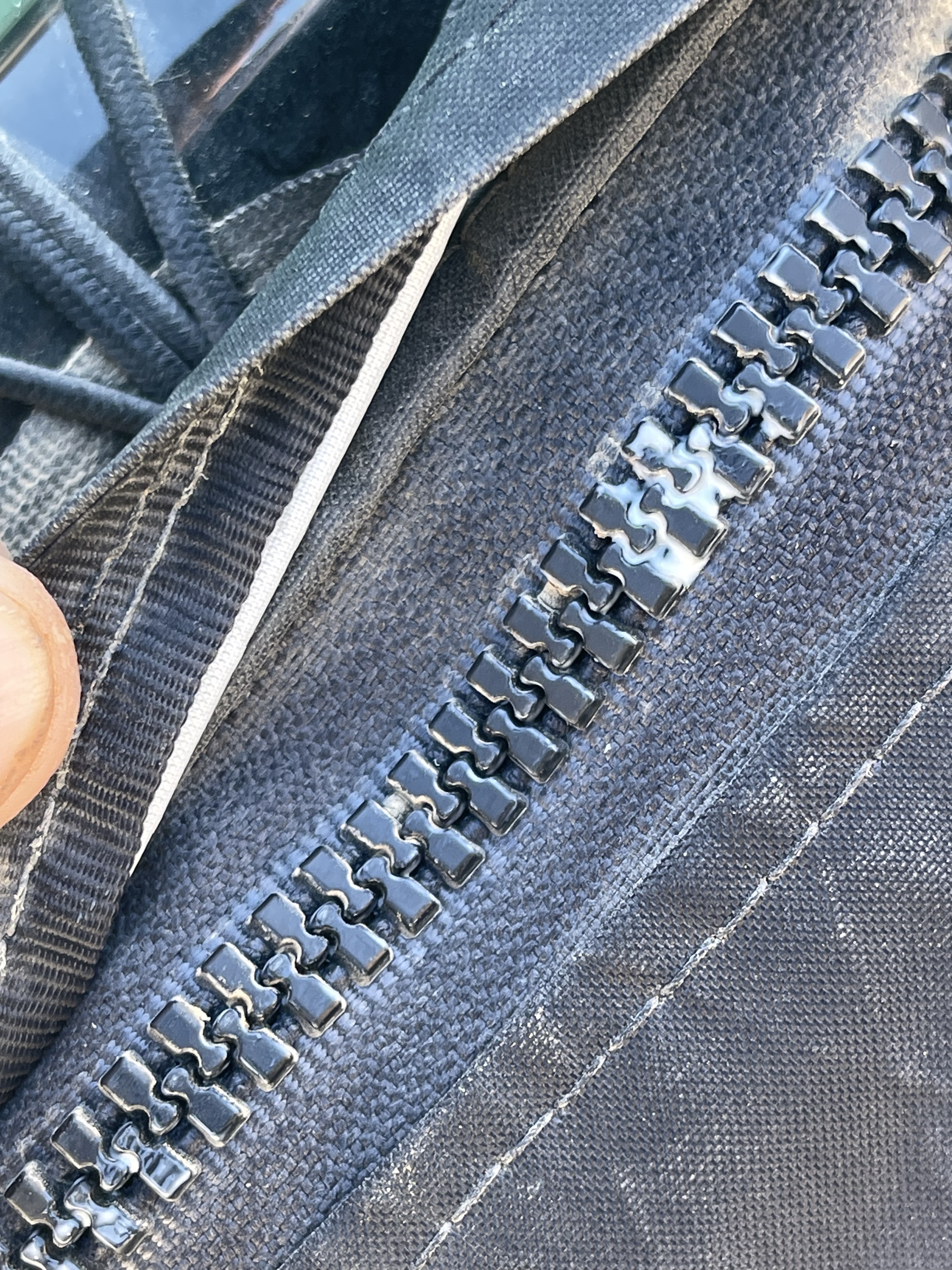
Now, it’s true that Squirt isn’t the cheapest option out there—but it lasts a long time, and for us, it’s one of those things worth investing in. Riding in extreme terrain like Baja means keeping your bike’s moving parts properly lubed and as dirt-free as possible is crucial.
We strongly discourage using oil-based lubes here. The dry climate makes the dust super fine and floaty—it clings to anything oily, gumming things up and trapping moisture. Over time, that can really mess with your drivetrain and compromise your components. In contrast, with Squirt, even when the rest of the bike is coated in dust, the drivetrain stays noticeably clean. That’s real proof of its quality and effectiveness.
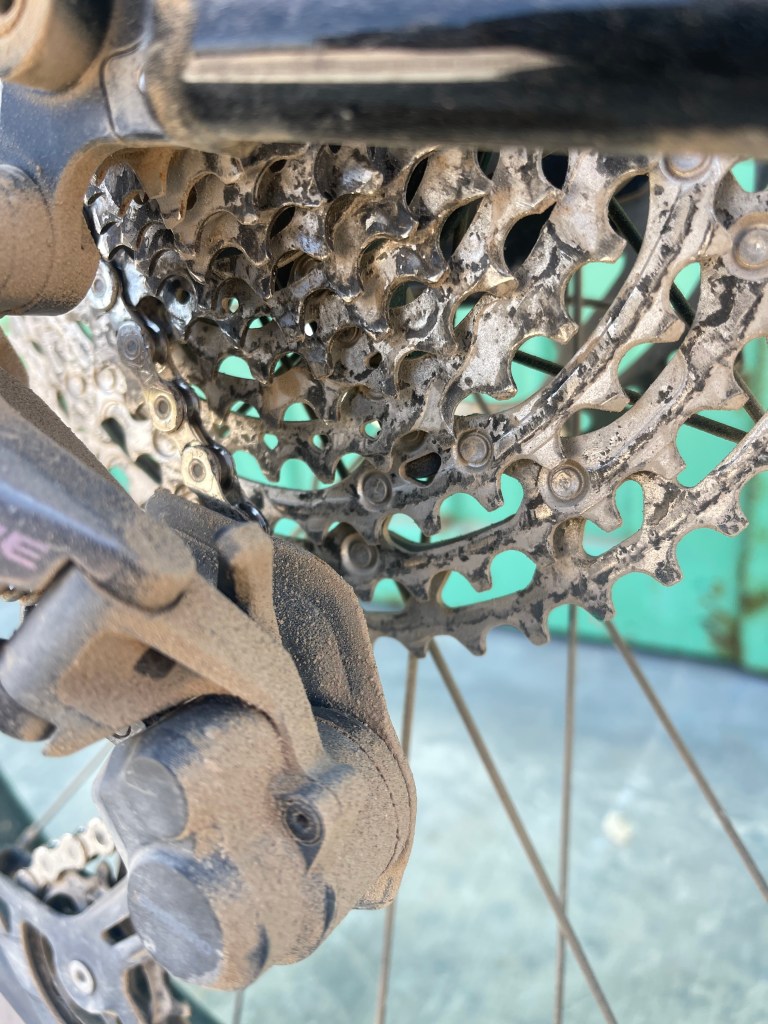
Bonus: Squirt is also the most widely available lube in the few bike shops scattered across the Peninsula—so it just makes sense to ride with it and stick with it. Buy Squirt dry lube here.
tip:
BRING A BANDANA!
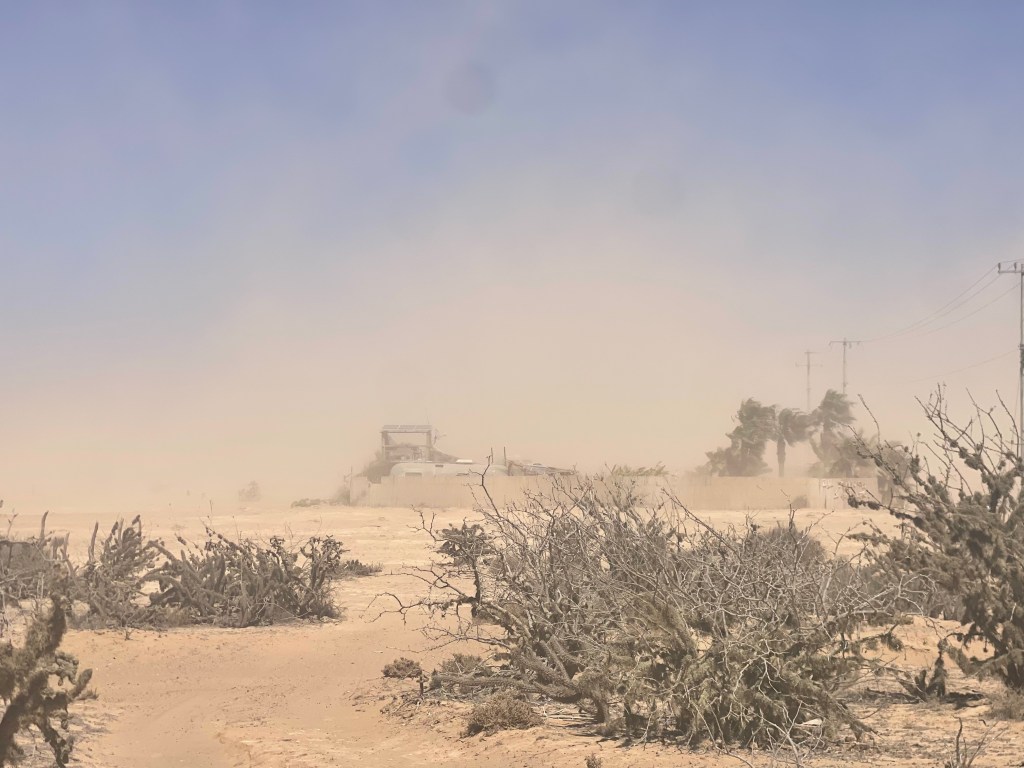
The wind in Baja can kick up a surprising amount of sand and silt, and breathing that in—especially while pedaling a bike—is something none of us want to deal with.
Along the coast of the peninsula, there are many areas with fine silt ponds. When the common strong winds sweep through, they dig into these silty spots and can create intense local dust storms, sometimes lasting for days.
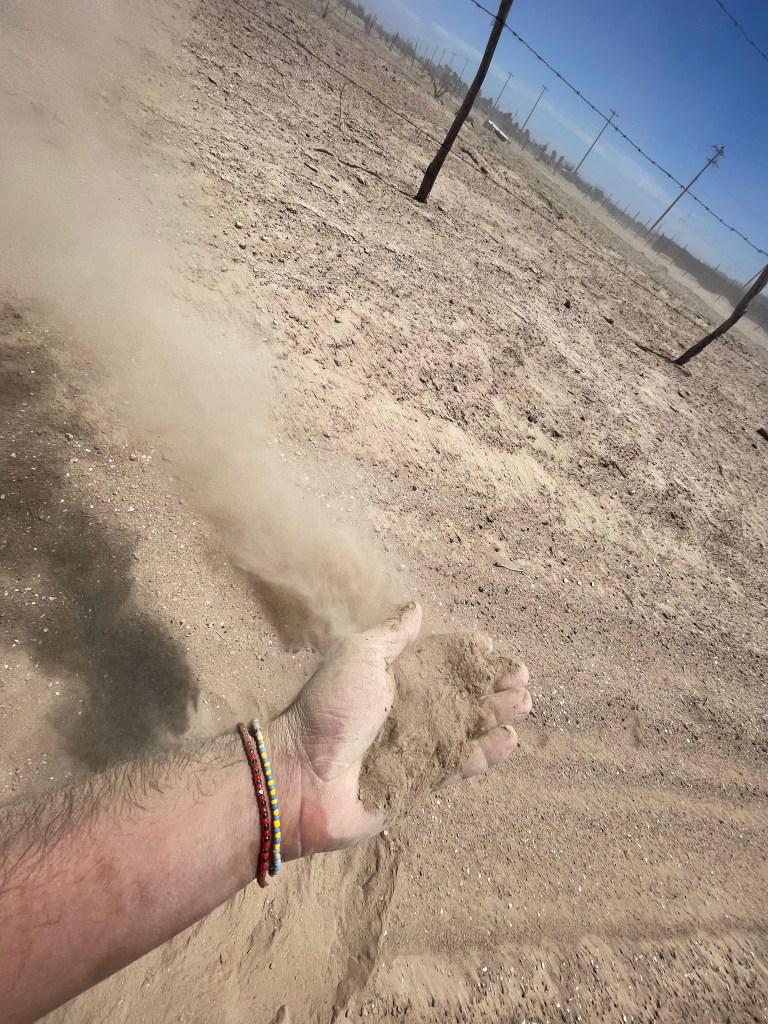
When we’re pedaling hard on our heavy bikes, our breathing becomes deep and intense. Our lungs open wide, drawing in fresh air to every corner that can take in precious oxygen. If the air was filled with regular sand, our nasal hairs could handle most of the filtering, keeping the worst of it out (though our eyes would still suffer). But Baja’s silt is a different story—super fine, almost powder-like, with particles sometimes smaller than 2.5 microns. This ultra-light dust mixes with the moisture in our noses, clogging up the natural filters and allowing much of it to be inhaled deep into our lungs.
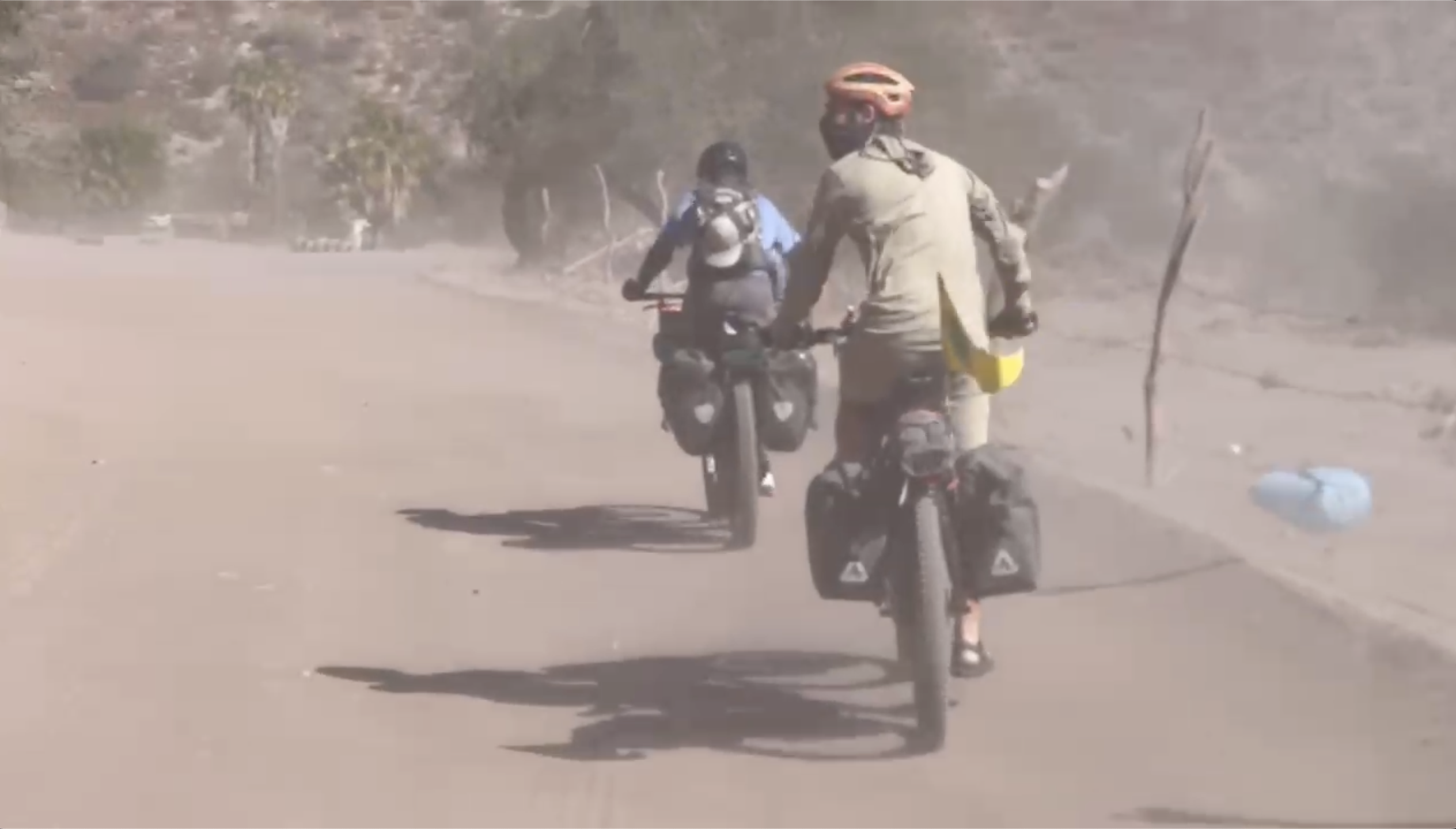
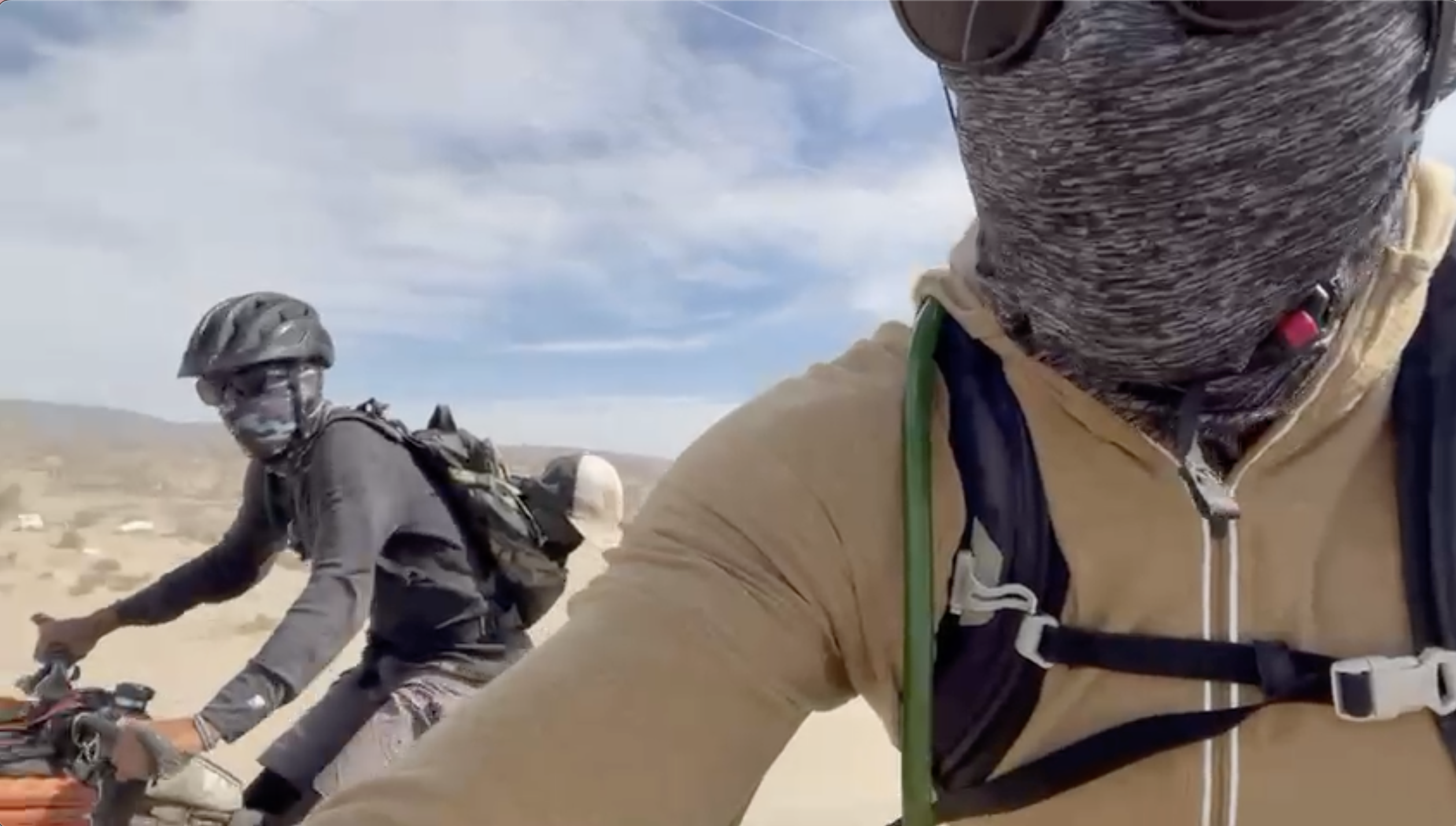
Prolonged exposure to silt like this can cause a range of health problems, from lung inflammation and heart stress to immune system weakening and, in more severe cases, dust pneumonia—with symptoms like fever and chest pain.
While these strong winds are most common in late winter and spring, they can surprise you any time of year during bikepacking trips.
Because of the potential health risks, it’s just smart to be prepared. A comfortable, stretchy bandana in an easy-to-reach pocket can make all the difference.
The most practical type for Baja—used by locals and travelers alike—is the tubular face mask style. These versatile bandanas can be worn in tons of ways: face mask, headband, neck gaiter, wrist wrap, knee warmer, and more. They dry quickly, are easy to find in shops, and if you’re in a village, local seamstresses often make them for workers and fishermen.
Best thing to do….get one before starting your trip!
Mattia Dalvit ( @busyerode )

 bikepackingbaja.com
Leave a comment