
We believe that the current method of assessing the difficulty of bikepacking routes is inappropriate and can put many people at risk.
Like many other outdoor activities (surfing, climbing, etc.), bikepacking has seen an exponential rise in popularity since the pandemic, creating a vast audience for all related content. This means that anyone producing such content today MUST take responsibility for recommending routes and, above all, for rating them.
Our estimate is that the current bikepacking audience consists of 40% beginners or people with little experience, 50% with intermediate-level experience, and 10% experts. This diversity in the audience necessarily calls for a differentiated rating system.
Unfortunately, we cannot expect such a large audience, with such a high percentage of non-professional riders, to thoroughly investigate the source of a difficulty rating—who wrote about the route, their level of experience, and how their skills compare—just to “translate” that rating into something relevant to their own reality and make a safe, informed decision about whether to undertake the route.
The current shepherd-sheep/priest-followers system is based on one person—typically with a very different level of skill and experience than the audience—pontificating, while the readers are expected to conform to that standard and set of expectations. This uniformity results in many users facing unpleasant surprises when tackling routes in real life rather than just on screen, as preparation and expectations are often described, and especially rated, using a standardized method from an elite group. This elite no longer shares its insights solely within a small circle of athletes but broadcasts them to a worldwide audience of hundreds of thousands of people.
“With great power comes great responsibility,” as Uncle Ben told Peter Parker. Therefore, it’s crucial to seriously reconsider the rating system and how routes are described—always asking, “Who is listening to me?”—instead of relying solely on the fine print of disclaimers and terms of use as a way to evade responsibility.
We believe that the safest way to assess routes is to involve users in the evaluation process, making them partially responsible for the rating.
Since everyone knows themselves better than anyone else, by providing simple guidelines that are easy to follow and leave little room for doubt or misunderstanding, we have determined that diversifying the rating system by skill levels can lead to a much safer and more objective evaluation method. Diversified also means within the same route. How can you assign a single rating, just one number, to 1,700 miles of absolute diversity like the Baja Divide? And that’s just one example. Averages have never been truly fair; they are merely a mathematical convention used to handle large numbers of people. Within route descriptions, authors should not hesitate to provide separate ratings for specific sections that deserve their own evaluation.
After all, we’ve all experienced it firsthand: that technical climb we couldn’t manage a few weeks ago, we now magically complete without ever stepping off the saddle. That sandy road that used to make us suffer is now easy to ride through, even with thinner tires. Those 40 kg of bike weight that once felt impossible to move have now become our best friends. And so on. We get stronger, our experience grows, fear diminishes, and self-confidence increases… all completely normal. So how can a standardized rating system possibly work?
We are all aware of the negative effects such a system has on children’s minds and life experiences in schools. The same applies to any field where a uniform rating system is used. Of course, there are situations where the sheer number of people involved or the nature of the field itself forces standardization as the only viable solution. But when it comes to bikepacking routes, displaying three numbers instead of just one is undeniably possible and beneficial— certainly not jeopardizing.
Here we are, then, with a new rating system based on individual experience and skill level.
- Three values under three different “belt colors”/levels instead of one
- Each user responsible for deciding which color applies to them
- A brief description to help both writers and readers place themselves within one of the three levels
Those of you familiar with martial arts will quickly understand this system. The only difference is that here, there is no Sensei deciding which belt you deserve. You have to be honest and sincere with yourself, self-assessing your level when the time is right—without rushing. The experiences you go through will inevitably determine the level you have reached.
Three colors ( like on skis descents! ):
– GREEN –
You’re likely green belt if TWO or more of the followings applies to you:
- It’s my first or second multiday bikepacking trip
- I never did a bike race in my life
- I’m still figuring out most of my gear
- I can pedal 30-50 km (20-30 miles ) a day, off-road, including many climbs, with a 35-40 kg ( 70-80 lbs ) rig
- I can hike my heavy bike on a steep trail with loose rocks for 30 min straight max.
– PURPLE –
You’re likely purple belt if TWO or more of the followings applies to you:
- I already did more than two multiday bikepacking trips
- I did some bike races ( road or MTB ) in my life
- All my equipment is pretty much set and tested besides a few minor things
- I can pedal 50-100 km ( 30-65 miles ) a day, off-road, including many climbs, with a 35-40 kg ( 70-80 lbs ) rig
- I can hike my heavy bike on a steep trail with loose rocks for 2-3 hours straight.
– BLACK –
You’re likely black belt if TWO or more of the followings applies to you:
- I’ve done tons of multiday bikepacking trips, also solo
- I raced or still race professionally ( road or MTB )
- I did at least one ultra distance self-supported bikepacking race
- My all equipment is hyper tested and figured out.
- I can pedal 100+ km ( 30-65 miles ) a day, off-road, including many climbs, with a 35-40 kg ( 70-80 lbs ) rig
- I can hike my heavy bike on a steep trail with loose rocks for 4+ hours straight.
Under each color, there will be a number from 1 to 5 with no fractions indicating the difficulty level of the route (or section of the route) for cyclists of that experience level.
We gave three ratings for three different experience levels, you are responsible for picking your riding and fitness level.
Example:

In this case the route difficulty is classified as a 4 for black belts, as a 5 for purple belts and as a 5+( which means too hard, out of scale ) for green belts.
Another example:

In this case the route is considered of level 2 ( mild ) for green belts and easy for both purple or black belts.
So what about the numbers? We just have 5 grades in total: 1 , 2 , 3 , 4 , 5. No fractions or decimals in between. This is enough. Only the extra “+” sign in case we consider a route to be too much for one of the levels.
1
EASY
2
MILD
3
TECHNICAL
4
CHALLENGING
5
VERY DIFFICULT
So how come we don’t talk about the level of resupply difficulty, the climb grade, the sand, and all other factors in our rating??????…..Well that’s because at the very end every rider is affected subjectively by each one of these factors and when for an ex ultra racer riding 110+ km a day no matter how steep or sandy the Baja Divide is the water and food resupply is to be calculated in one way, you may all understand that it is going to be a totally different type of planning and stress for a green belt riding just 40 km.
So that’s why differentiation is important, because you don’t need to worry anymore about who is that is writing about the route. You know who you are and what you’ve done so far so you can humbly place yourself the right belt color. This is not a matter of pride, this will save your life and many bad experiences promoting improvement in a enjoyable and safe way.
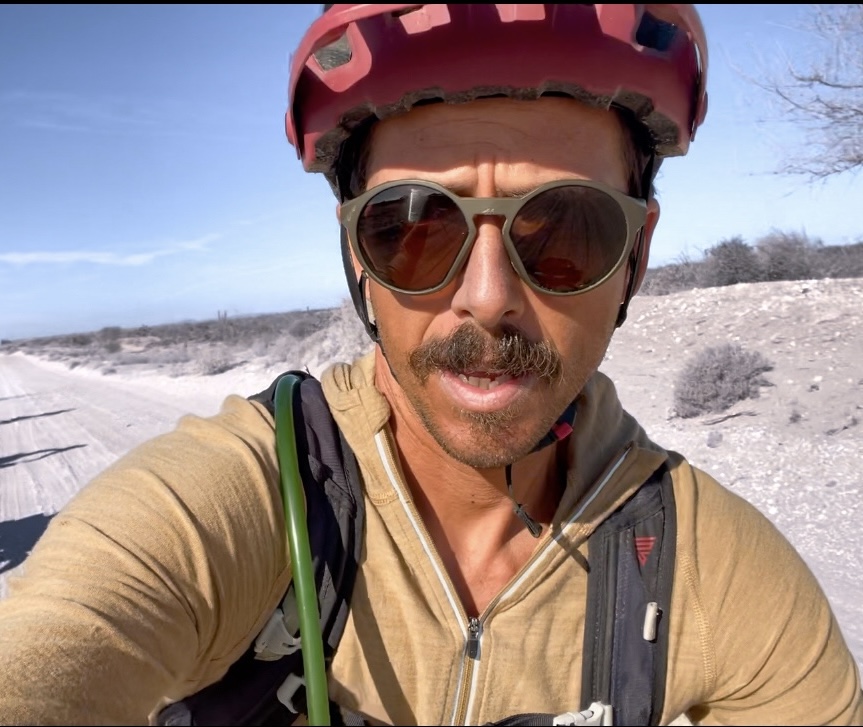
Mattia Dalvit ( @busyerode )


Leave a comment